
Short answer: A good coffee shop cup does three jobs at once: it keeps hot coffee comfortable to hold, it carries your brand where customers can see it, and it survives the trip from counter to car. That usually means a double-wall cup for hot takeaway drinks, a sip lid matched to the cup’s rim, sizes matched to your actual drinks — not to a competitor’s menu — and custom printing ordered at an MOQ of 30,000 pcs per size and artwork, with samples in about 7 days and bulk in about 30 days after confirmation.
Start With Your Drinks, Not With a Catalogue
Cup choice goes wrong when it starts from a supplier’s catalogue instead of from the drinks. List every hot drink you sell, its serving size and how it leaves the shop: drunk at a table, carried to an office, or sipped in a car. A dine-in flat white and a takeaway large latte need different cups, even if both are “coffee”.
Sizes are the first decision. Most coffee shops run two or three cup sizes — commonly 8 oz, 12 oz and 16 oz — and the mistake is copying another shop’s sizes instead of measuring your own drinks. Pour your actual drinks into measuring cups: the size where the drink fills the cup with a little headroom is your size.
Single-Wall or Double-Wall for Coffee
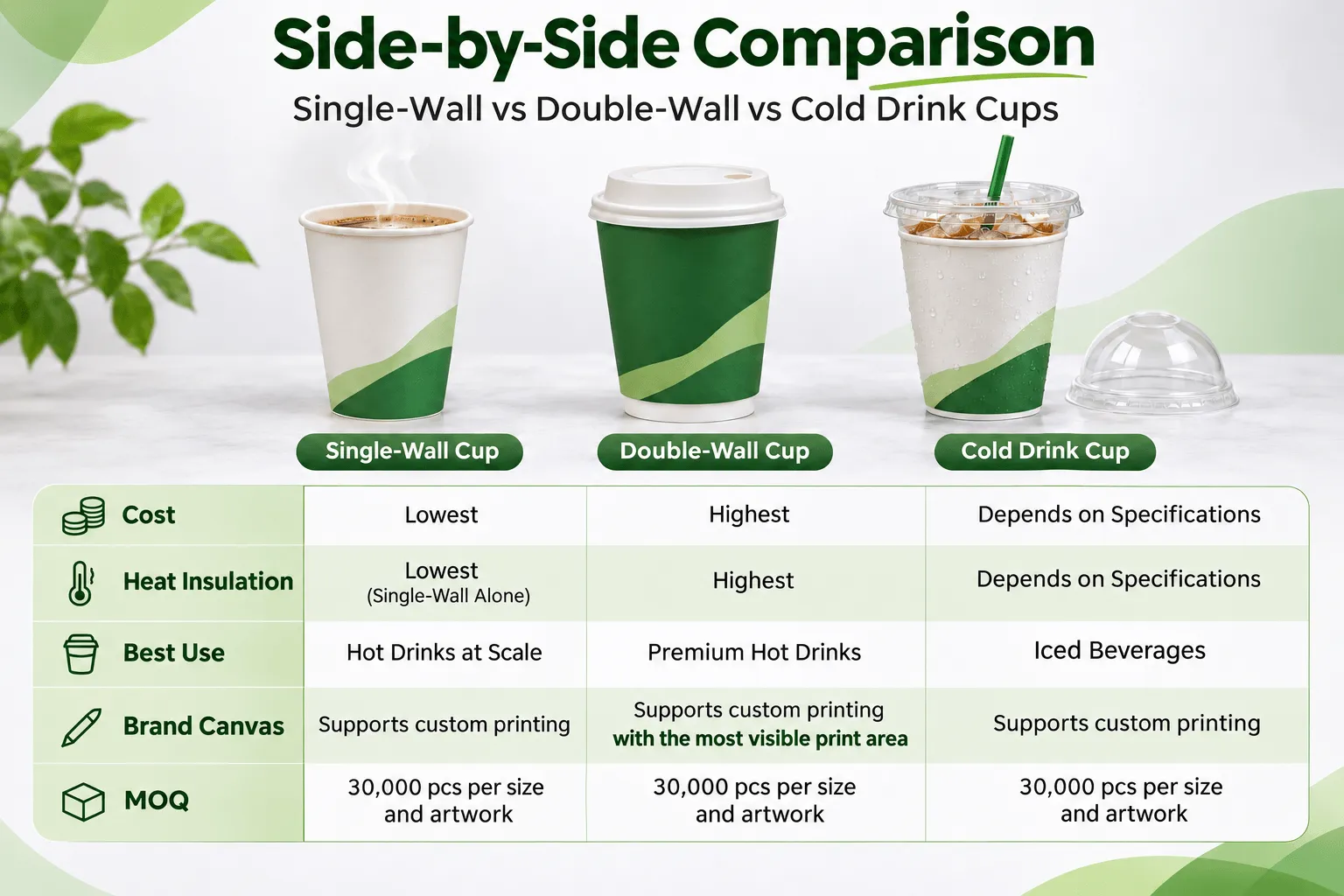
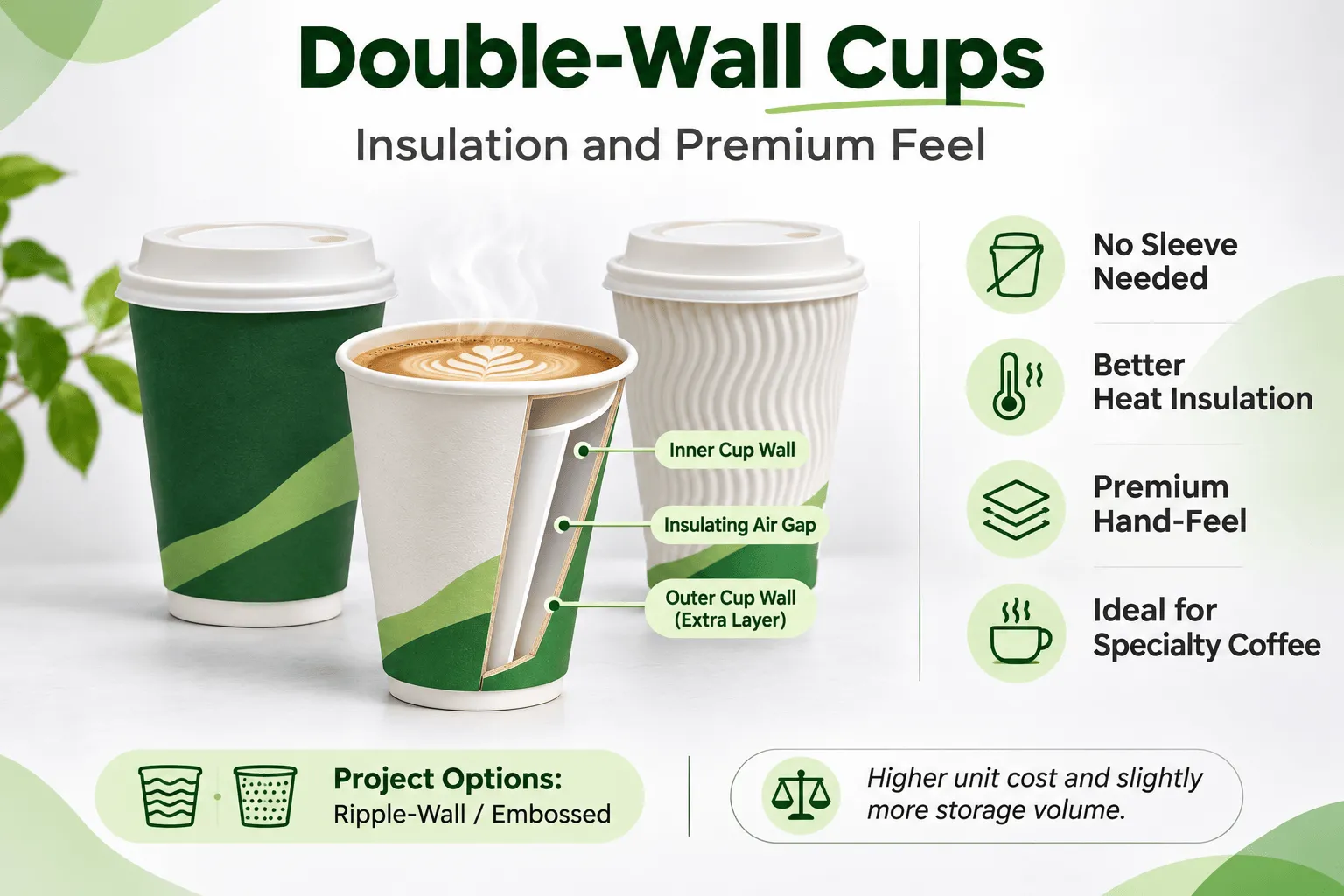
For hot coffee, the wall is the comfort decision. A single-wall cup needs a sleeve before a customer can hold it comfortably; a double-wall cup insulates with an air gap between two layers, so no sleeve is needed. Our single-wall vs double-wall comparison works through the cost maths: once you count the sleeve’s price, storage and fitting time, double-wall often costs no more overall for a busy takeaway trade.
The branding case is just as strong. A sleeve covers your print; a double-wall cup leaves it visible for the whole drink. If your cup is your most-seen brand surface — and for a coffee shop it usually is — that visibility is worth paying for. Single-wall still has a place: dine-in coffee, where the cup sits on a table, and iced coffee, where insulation is unnecessary. Many shops run double-wall for hot takeaway and single-wall for iced drinks.
Lids: The Sip Lid Makes or Breaks the Coffee
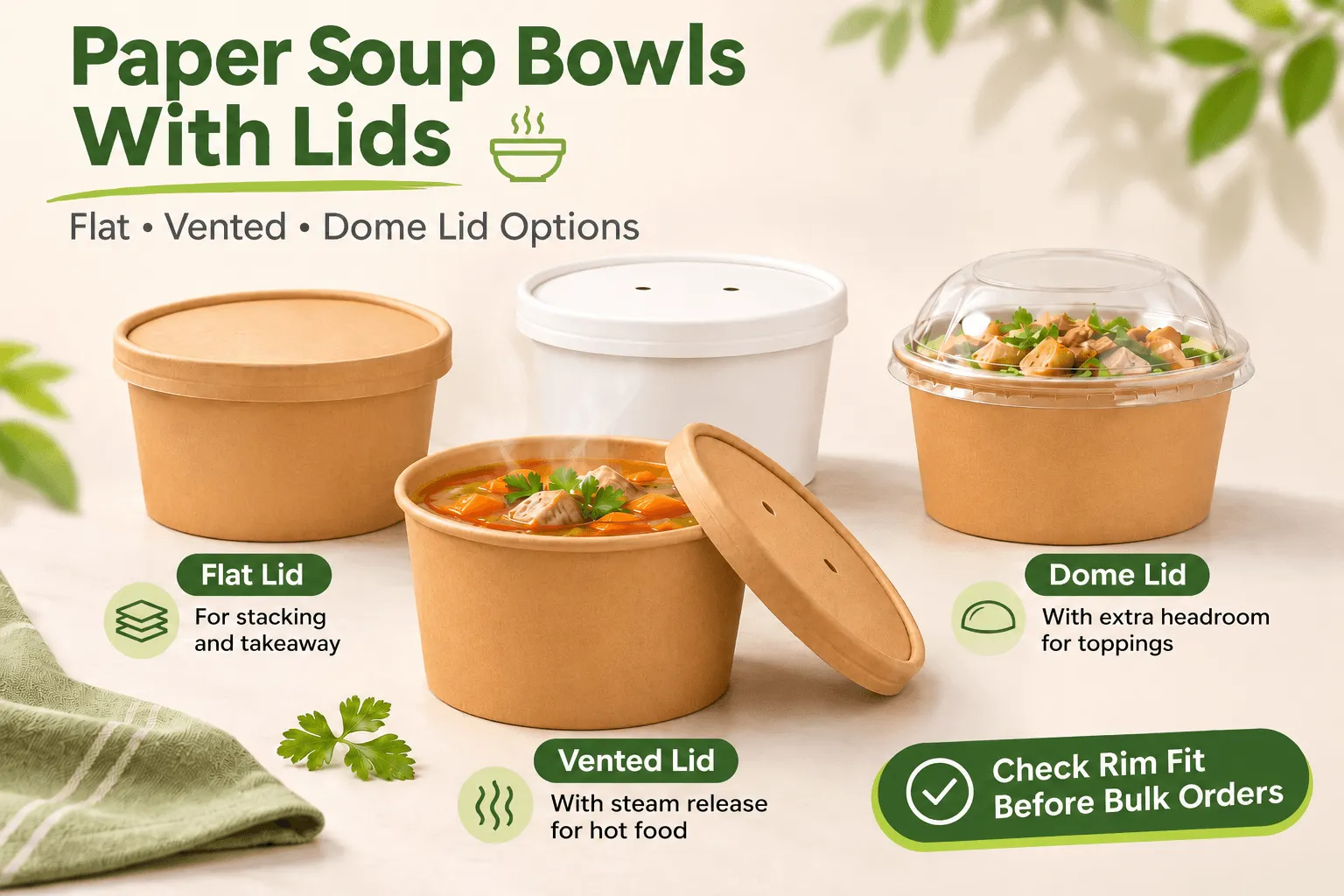
Coffee’s lid is a sip lid — a raised spout the customer drinks through without a straw. Two details decide whether it works: venting and fit. A small vent hole lets air in as the customer drinks, keeping the flow smooth and releasing steam pressure that loosens lids. Fit depends on the cup’s rim diameter in millimetres, not its volume — two suppliers’ “12 oz” cups can have different rims. Our paper cup lids guide explains the fit problem and the test routine: fill, lid, carry, tilt.
Order lids with the cups wherever possible — one supplier, one rim specification, one party responsible if the fit is wrong. If you run both hot and iced drinks, you need two lid types: sip lids for hot, flat or dome lids for iced. Plan lid quantities per size, one-to-one with cups plus a few percent spare.
Custom Printing: Your Cup Is Your Billboard
A coffee cup is carried through streets, offices and stations — it is the cheapest outdoor advertising a coffee shop owns. Custom printing turns it into a billboard, and the decisions are practical ones: logo placement, colour matching and print quality. Confirm the print area per wall type before approving artwork, since a double-wall cup’s outer wall differs from a single-wall cup’s. If brand colour matters, ask how the factory matches it — our brand colour matching guide explains Pantone and CMYK proofing — and check the artwork requirements for file formats before sending designs.
One caution: do not approve artwork from a screen alone. Colours shift between screen and press, and a design that looks fine flat can wrap awkwardly on a curved cup. A printed sample, about 7 days, settles the question cheaply.
Ordering for a Coffee Shop: Quantities and Timing
Coffee shops order cups by the drink, not by the month. Count your daily hot-drink sales per size, multiply by your restock cycle, and compare against the 30,000-piece MOQ per size and artwork. A shop selling 200 hot drinks a day goes through 30,000 cups in about five months — a reasonable commitment for a core size, but a long one for a size that sells twenty a day.
Timing follows the standard sequence: samples in about 7 days, bulk production in about 30 days after sample or order confirmation. Order at least five weeks before you need stock, and keep a buffer of plain cups for the gap between running out and the new run arriving. Our paper cup buying guide covers the full ordering picture.
FAQ
What size paper cup should a coffee shop use?
Most coffee shops run 8 oz, 12 oz and 16 oz. Measure your actual drinks — the right size is the one your drink fills with a little headroom. Each custom printed size carries its own MOQ of 30,000 pcs, so only print the sizes that sell.
Are double-wall cups worth it for a coffee shop?
For hot takeaway coffee, usually yes. They remove the sleeve, keep the drink hot longer and keep your branding visible. For dine-in coffee and iced drinks, single-wall cups are the economical choice. Many shops run both.
What lid should I use for hot coffee?
A PP sip lid, matched to the cup’s rim diameter in millimetres — not to its volume. Test the exact cup-and-lid pair filled with hot coffee, carried and tilted, before bulk. Order lids with the cups so one supplier owns the fit.
How long does a custom printed coffee cup order take?
Samples take about 7 days; bulk production takes about 30 days after sample or order confirmation, plus shipping. Plan at least five weeks from enquiry to stock in hand, and confirm the MOQ — 30,000 pcs per size and artwork — before approving artwork.
Ready to spec your coffee cups? Get a free quote — tell us your drinks, sizes and daily volumes, and we’ll confirm wall, lid and lead time per size. Browse the cups range and read our single-wall vs double-wall guide to compare the options.