
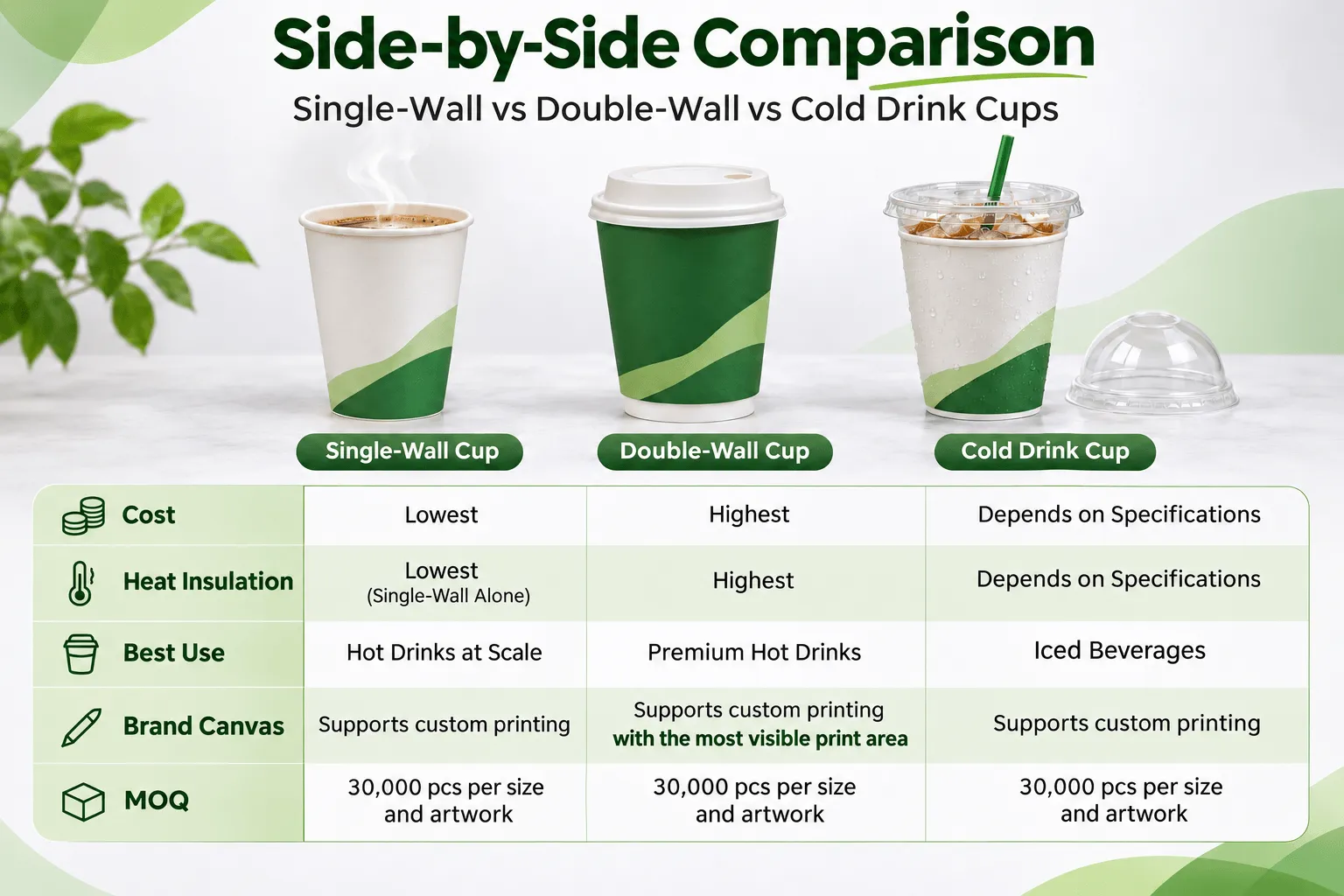
Short answer: A single-wall cup is one layer of paperboard — light, cheap and right for cold drinks and for hot drinks served with a sleeve. A double-wall cup adds a second, outer layer with an air gap, so it insulates your customer’s hand without a sleeve. Choose by drink temperature and how the cup is held: cold drinks and dine-in hot drinks suit single-wall; hot takeaway drinks suit double-wall. The wrong choice costs you either in sleeves and complaints, or in cup price you did not need to pay.
What the Two Walls Actually Are
A single-wall cup is a single layer of food-grade paperboard, coated inside — usually PE, PLA or water-based — to hold liquid. It is the lightest and least expensive paper cup, and it prints cleanly. Its weakness is heat transfer: a hot drink makes the outside too hot to hold comfortably within a minute or two.
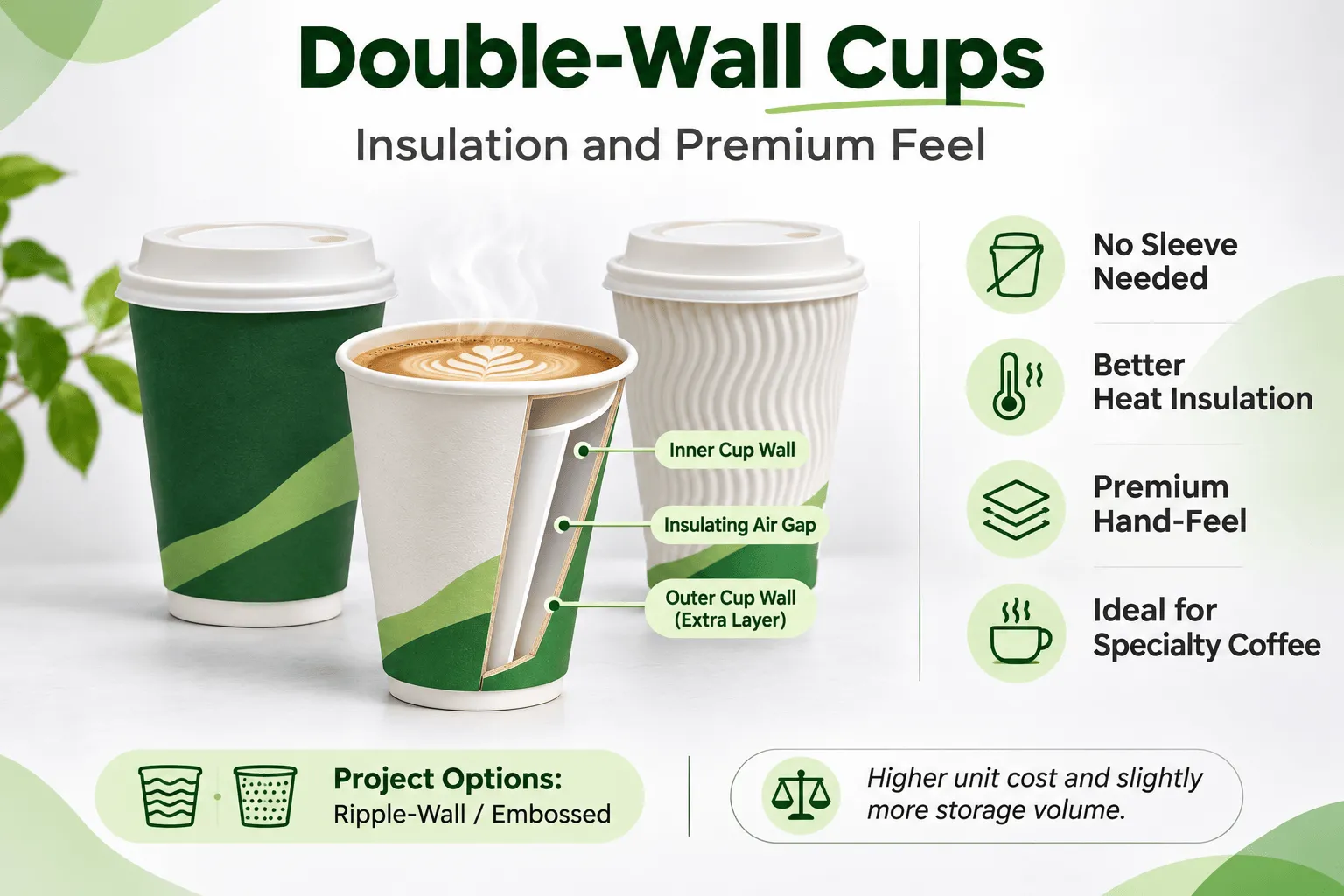
A double-wall cup wraps that inner cup in a second outer wall, with a small air gap between the layers. The air gap is the insulation — it slows heat reaching the outer surface, so the cup stays comfortable to hold while the drink stays hot longer. A ripple-wall cup is a variant of the same idea, with a corrugated outer layer that adds grip as well as insulation; it is usually made to order for a specific project, so confirm availability before planning a menu around it.
All three use the same inner coatings. The wall changes heat and handling, not what the cup can hold — our PE vs PLA vs water-based coating guide covers the coating choice separately.
Heat, Comfort and the Sleeve Question
The practical difference is the customer’s hand. With a single-wall cup of hot coffee, most people reach for a sleeve within a minute — and a sleeve is a second item to buy, store and fit. With a double-wall cup, the sleeve disappears: the cup is the insulation. That matters most for takeaway, where the customer walks, drives and holds the cup for ten minutes or more.
For cold drinks the difference nearly vanishes. A single-wall cup handles iced coffee, cold tea and soft drinks perfectly well, and a double-wall cup adds cost without adding comfort — cold does not burn. The one exception is condensation: a very cold drink in a humid room will sweat on either wall, so if your cups travel in bags, think about the bag and the lid, not the wall.
The rule of thumb: if the drink is hot and the customer holds the cup, double-wall earns its price. If the drink is cold, or hot and drunk at a table, single-wall is the economical choice.
Cost: What Double-Wall Really Adds
Double-wall cups cost more per piece — more material, an extra forming step. The honest comparison is not cup against cup, but system against system: a single-wall cup plus a sleeve, against a double-wall cup with no sleeve. Once you add the sleeve’s unit cost, its storage and the labour of fitting it, the gap narrows, and for high-volume hot-drink sellers it can disappear entirely.
Print, Branding and the Customer’s Hand
Both walls print well, but they present a brand differently. A single-wall cup gives a flat, smooth print surface — the cleanest canvas for a logo. A double-wall cup’s outer wall is also printable, and because customers hold it longer without a sleeve covering the design, your branding stays visible for the whole drink. If the cup is your main brand surface, that visibility is worth pricing in.
How to Decide: A Simple Menu Test
Walk your menu drink by drink and ask two questions: is it served hot, and does the customer carry it? Hot and carried — takeaway coffee, tea, hot chocolate — double-wall. Hot and seated — dine-in coffee in a café — single-wall, with a sleeve on hand for the customers who ask. Cold — iced coffee, cold brew, juice — single-wall. Hot with toppings — whipped cream, foam caps — pair the wall choice with the right lid; our paper cup lids guide matches dome, flat and sip lids to drinks.
Then order samples of both walls in your actual sizes — samples take about 7 days — and test them the way customers use them: fill with your hottest drink, hold for ten minutes, carry, and check the outside temperature and the print. Bulk production runs about 30 days after sample or order confirmation, so test early.
Browse the cups range to see the standard sizes, including our double-wall options.
FAQ
What is the difference between single-wall and double-wall paper cups?
A single-wall cup is one layer of paperboard; a double-wall cup adds a second outer layer with an air gap that insulates the hand. Single-wall is lighter and cheaper and suits cold drinks; double-wall keeps hot drinks comfortable to hold without a sleeve and keeps them hot longer.
Do I still need a sleeve with double-wall cups?
Usually not — that is the point of the second wall. Most customers hold a double-wall cup of hot coffee comfortably with no sleeve. If your drinks are served near-boiling or held for a long time, test a sample first; a sleeve remains an option for the hottest serves.
Are double-wall cups better for cold drinks?
Not really. Cold drinks do not need insulation for comfort, so the extra wall adds cost without a benefit. Single-wall cups handle iced drinks well. Choose double-wall for hot takeaway drinks and single-wall for cold drinks and dine-in hot drinks.
Can both single-wall and double-wall cups be custom printed?
Yes. Both take custom printing, with an MOQ of 30,000 pcs per size and artwork. Confirm the print area for each wall type before approving artwork, since the outer wall’s dimensions differ from the inner cup’s.
Not sure which wall your menu needs? Get a free quote — tell us your drinks, sizes and volumes, and we’ll recommend the wall, coating and lid per drink. Browse the cups range and read our paper cup buying guide for the full picture.