
Quick Answer: How Do You Choose the Right Paper Cup Lid?
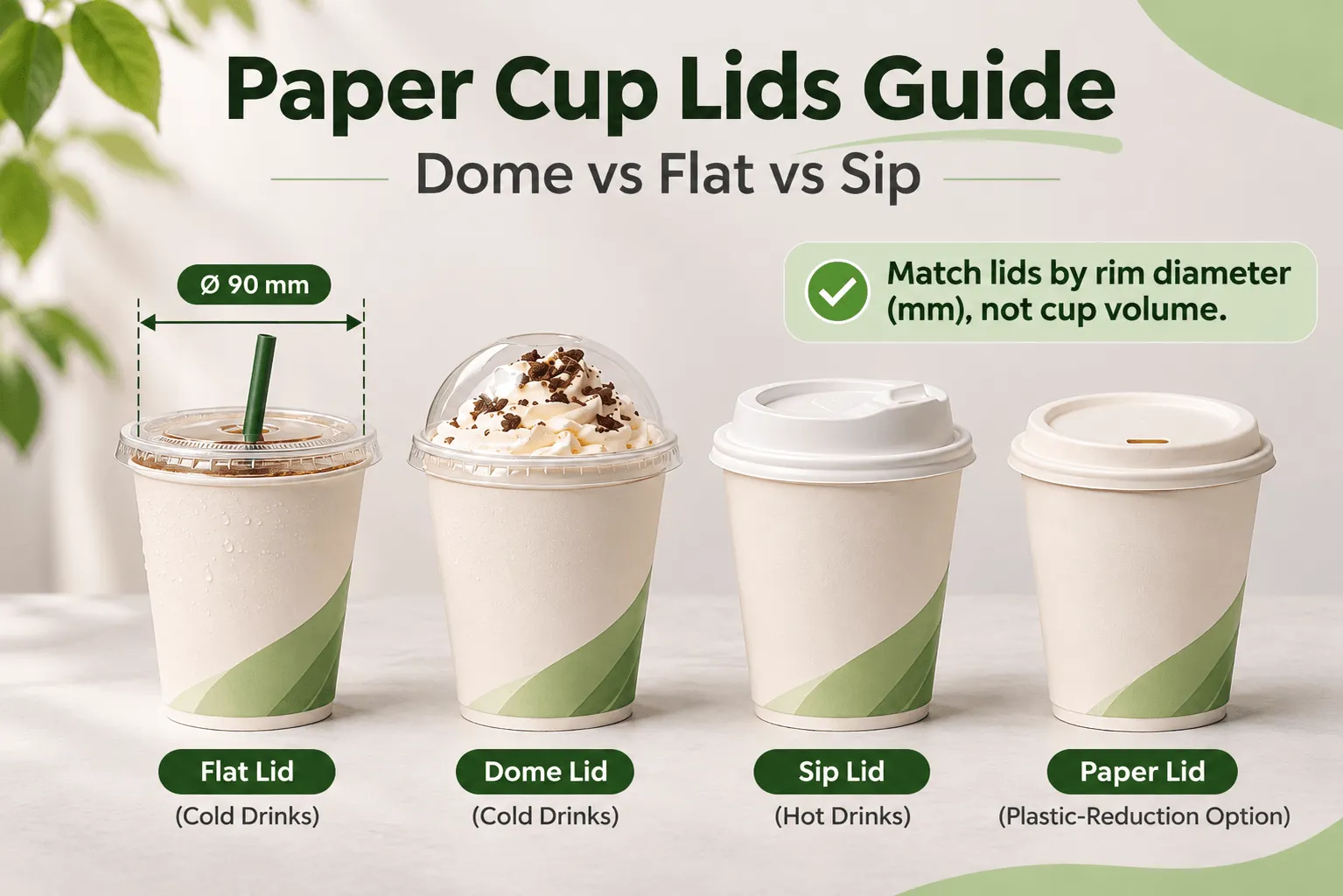
Choose paper cup lids based on drink type, serving temperature, lid material, and cup rim diameter.
- Flat Lids: Ideal for iced coffee, juice, and cold drinks with straws.
- Dome Lids: Provide extra space for whipped cream, foam, and toppings.
- Sip Lids: Designed for hot takeaway coffee and other beverages.
- Paper Lids: An option for brands looking to reduce conventional plastic packaging.
Important: Cup lids must match the actual rim diameter and rim profile. A 12oz cup does not automatically fit every lid labeled for 12oz cups.
Always test the cup and lid together before placing a bulk order.
Start With the Drink: The Four Lid Types
| Lid type | Best for | Key features |
| Flat lid | Cold drinks served with a straw | Low profile, stackable, straw slot or cross-cut opening |
| Dome lid | Iced drinks with whipped cream, foam, bubble tea add-ons | Headroom so toppings are not crushed; hole takes a wide straw |
| Sip lid | Hot drinks on the go | Raised spout, no straw needed; standard coffee-to-go format |
| Paper lid | Brands reducing plastic in their packaging | Formed paperboard; see the trade-offs below first |
Flat lids keep cold drinks sealed in transit and stack neatly. Dome lids exist for one reason: vertical space — whipped cream, foam caps, and add-ons above the rim line get crushed by a flat lid. Sip lids are designed around the drinking experience; spout shape and flow matter more than buyers expect. Paper lids are the newest option, usually ordered for positioning rather than performance — read on before choosing them.
Lid Materials: Plastic Is the Default, Paper Is Catching Up
Most lids are plastic, and the three common resins differ. PS is rigid and inexpensive — the usual flat and dome cold-drink lid — but brittle and crack-prone if flexed. PET is clear, for cold drinks where presentation matters. PP tolerates heat better than both, which is why most hot-drink sip lids are PP.
Paper lids are formed from paperboard and match a paper cup’s plastic-reduction story. The honest trade-offs: the fit is less forgiving than a moulded plastic lid, the seal depends on a precise rim match, and unit cost is higher. They work best on cold and ambient drinks. For hot drinks in a moving vehicle, a well-fitted plastic sip lid is still the safer default.
The Fit Problem: Rims, Not Ounces
This is where lid orders go wrong. A lid does not fit a volume — it fits a rim diameter: the outside measurement across the rolled rim, in millimetres. Volume tells you nothing reliable about that measurement. Two cups both sold as “12 oz” by different factories can have different rim diameters and curl shapes; a lid that snaps beautifully onto one can rock, leak, or pop off the other.
Three working rules follow from that:
- Source lids with the cups wherever possible — one supplier, one rim spec, one party responsible if fit is wrong.
- If you source lids separately, work from physical cups, not a spec sheet. Send the lid supplier actual cups, or measure rims on production cups, not samples from another run.
- Test the combination the way customers use it. Snap it on, fill it, carry it, tilt it, squeeze it gently — a lid that fits on a desk can still fail in a delivery bag.
Still choosing the cups? Our paper cup buying guide covers structure and coating — decide the cup first, then match the lid.
Paper Cup Lid Types Comparison
| Lid Type | Best Application | Common Material | Key Consideration |
|---|---|---|---|
| Flat Lid | Cold drinks with straws | PET / PP / PS | Straw opening and rim fit |
| Dome Lid | Cold drinks with toppings | PET / PP / PS | Dome height and straw hole |
| Sip Lid | Hot coffee and tea | PP / other rated materials | Heat performance and spout design |
| Paper Lid | Selected takeaway drinks | Formed paperboard | Coating, temperature suitability and fit |
Hot Drinks: Venting, Sip Holes, and Heat
Hot drinks add three details cold drinks forgive. Venting: a small vent hole lets air in as the customer drinks, keeping flow smooth instead of glugging, and releases steam pressure that loosens lids. Sip-hole design: the opening and spout shape decide whether the drink flows in a thin, controllable stream or all at once — and whether the first sip scalds. Heat behaviour: hot liquid stresses the seal where lid meets rim, so a lid that seals a cold drink perfectly may weep at the seam when near-boiling. Test hot lids at serving temperature, not with warm tap water.
Before You Order: The Lid Checklist
- Rim diameter in millimetres, confirmed against the actual cups — see our cups category and confirm the match per size.
- Lid type and material per drink — not one lid for the whole menu.
- Quantity parity: lids should match cups one-to-one per size, plus a few percent spare for drops and damage. Custom printed cups run at MOQ 30,000 pcs per size and artwork — plan lid quantities per size, not as one lump total.
- Samples tested together: cup and lid as a pair — filled, carried, tilted.
Our quote preparation checklist covers the cup side of the order; add the lid lines above and your request is complete.
FAQ
Are paper cup lids universal across brands?
No. Lids fit a rim diameter and rim shape, not a volume. A lid made for one factory’s 12 oz cup may not seal on another’s. Treat every pairing as unproven until you have snapped them together and carried a full drink.
Can I order lids separately from cups?
Yes, and it can make sense — a regional lid supplier can be faster for restocks. But you take on the fit risk yourself: send physical cups from production stock, confirm the rim diameter in millimetres, and approve a fitted sample before bulk ships.
Paper lids vs plastic lids — what is the honest trade-off?
Paper lids reduce plastic and match a paper cup’s positioning, but the fit is less forgiving, the seal depends on an exact rim match, and unit cost is higher. Plastic lids — PP for hot drinks, PET or PS for cold — seal more reliably across more cups. Many buyers use paper lids for cold drinks and keep plastic sip lids for hot.
How do I make sure lids fit before a bulk order?
Order samples of the exact cup-and-lid combination and test them as a pair: fill with your actual drink at serving temperature, lid it, carry it, tilt it, and leave it standing for your delivery window. Samples take about 7 days — cheap insurance, since bulk runs around 30 days after sample or order confirmation and a late-found fit problem costs a full production cycle.
What is the difference between PET and PP cup lids?
PET lids are commonly selected for clear cold-drink packaging, while suitable PP lids are often used for hot beverage applications. Always confirm the product’s temperature rating and food-contact requirements.
Will a 90mm lid fit every 90mm paper cup?
Not necessarily. Cups with the same nominal rim diameter may have different rolled-rim profiles and tolerances. Physical fit testing is recommended.
Can dome lids be used for hot coffee?
Dome lids are commonly used for cold drinks with toppings. Hot beverage use requires a lid specifically designed and tested for the intended temperature.
What information should I provide when ordering cup lids wholesale?
Provide the cup rim diameter, cup samples, required lid type, lid material, drink temperature, order quantity, and destination market.
Ready to match cups and lids that actually fit? Get a free quote — tell us your drinks, sizes, and volumes — we’ll confirm rim match and lid type per size. Browse the cups range and use the quote preparation checklist to have every detail ready.