
Quick Answer: Kraft vs White Paper Bowls — Which Should You Choose?
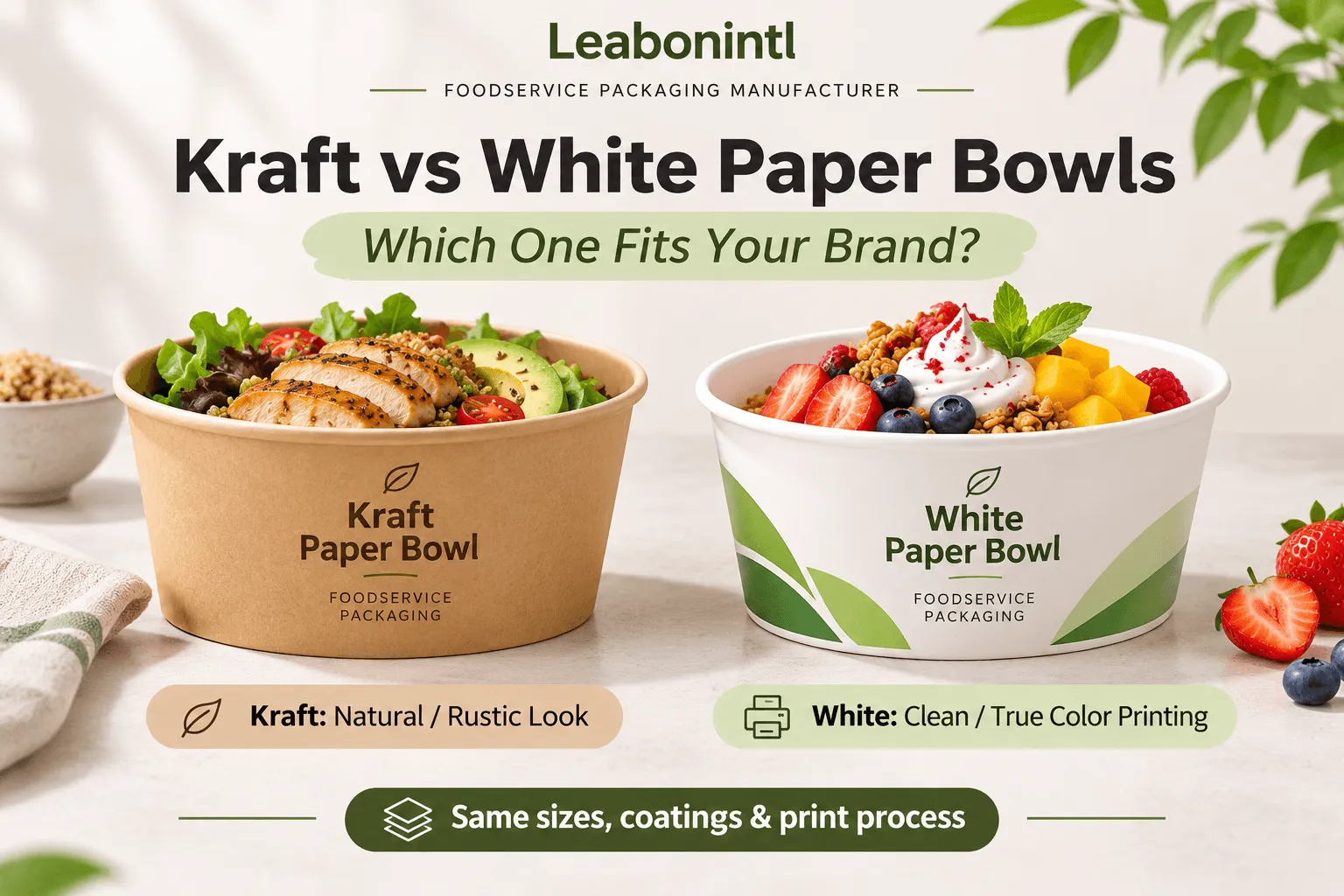
Kraft paper bowls offer a natural brown appearance, making them popular for salad bars, bakeries, and brands with earthy or minimalist packaging designs.
White paper bowls provide a neutral printing surface, making them a practical choice for colorful logos, pastel designs, and detailed branding.
Both options can be suitable for foodservice packaging when made with appropriate food-contact materials and barrier coatings.
The best choice depends on your brand design, printing requirements, food application, and budget. Request printed samples to compare colors and finishes before bulk production.
What the Two Boards Actually Are
Both start as food-grade paperboard with a barrier coating inside. The difference is the board itself:
- Kraft board is unbleached. The wood fiber keeps its natural brown color — the warm, earthy tone is the color of the material itself, not a printed effect.
- White board is bleached and finished with a clean white surface. A neutral, blank canvas: whatever color you specify is the color you see.
Everything downstream — barrier performance, rigidity, size range — is comparable. The choice is about print, perception, and presentation.
Print Results: Where the Difference Really Shows
This is the factor buyers underestimate: printing ink is translucent, so the board underneath tints every color laid on it.
- On white board, ink reproduces true to spec. Bright reds stay bright, pastels stay delicate, and Pantone matching is straightforward.
- On kraft board, the brown base shifts every color warmer and darker. A bright yellow turns mustard; a light blue goes muted and grey-green; fine pastel branding can lose fidelity entirely.
- White elements need special handling on kraft. There is no “white” in a standard CMYK print — on white board, white is just unprinted board. On kraft, a white logo or text requires white ink or an opaque underbase printed first — an extra plate to plan for.
None of this makes kraft a bad print surface — bold, dark, earthy designs look excellent on it — but artwork has to be designed for the board. If color accuracy across a product line matters, our guide to brand color matching for custom packaging walks through how proofing catches these shifts before production.
Kraft vs White Paper Bowls Comparison
| Factor | Kraft Paper Bowls | White Paper Bowls |
|---|---|---|
| Appearance | Natural brown | Clean white |
| Brand Style | Rustic, earthy, minimalist | Modern, colorful, versatile |
| Color Printing | Substrate may affect colors | Neutral base supports brighter colors |
| White Logo | May require opaque white ink | White can be left unprinted |
| Food Applications | Salads, grain bowls, takeaway | Desserts, salads, takeaway |
| Barrier Coating | Options depend on construction | Options depend on construction |
| MOQ | Typically 30,000 pcs per size/artwork | Typically 30,000 pcs per size/artwork |
| Sustainability | Depends on full material structure | Depends on full material structure |
Brand Perception: What Each Color Signals
- Kraft reads natural and honest. It suits delis, bakeries, and salad and grain-bowl concepts whose story leans on simplicity and “close to the source” ingredients — many such brands lean kraft for exactly this reason.
- White reads clean and deliberate. It suits dessert, yogurt, and ice-cream concepts, modern fast-casual chains, and brands with bright or pastel identities — dessert and frozen-yogurt brands often pick white because their colors and toppings are the marketing.
Neither signal is better — but a mismatch is costly: a neon-branded dessert concept on kraft looks muddy, and a farm-to-table deli on glossy white looks corporate.
How the Food Itself Looks
- Salads and grain bowls gain warmth in kraft: greens and grains sit naturally against brown, and the bowl reads as part of the meal — one reason kraft is a common default across our paper salad bowls range.
- Soups, poke, and colorful dishes often photograph better in white: the neutral rim makes reds, oranges, and purples look vivid, especially in delivery-app photos where the image sells the dish.
If most of your sales come through delivery platforms, order samples in both boards and photograph your real menu items — ten minutes with a phone settles it faster than any spec sheet.
Practical Notes: Coatings, Sizes, and End of Life
Everything operational stays the same across both boards:
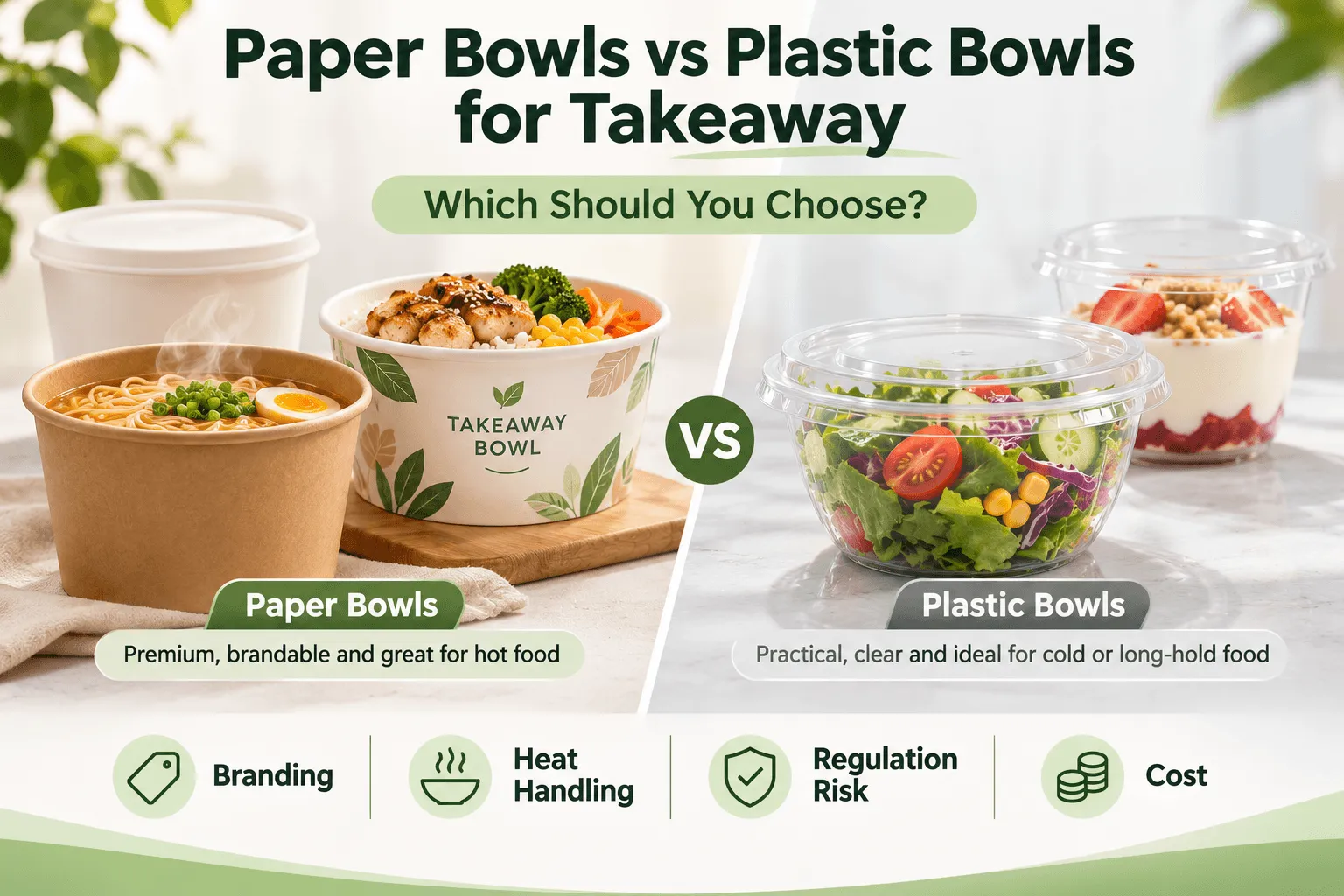
- Coatings: both take PE, PLA, and water-based barrier coatings, matched to your food the same way (our paper vs plastic comparison covers coatings in context).
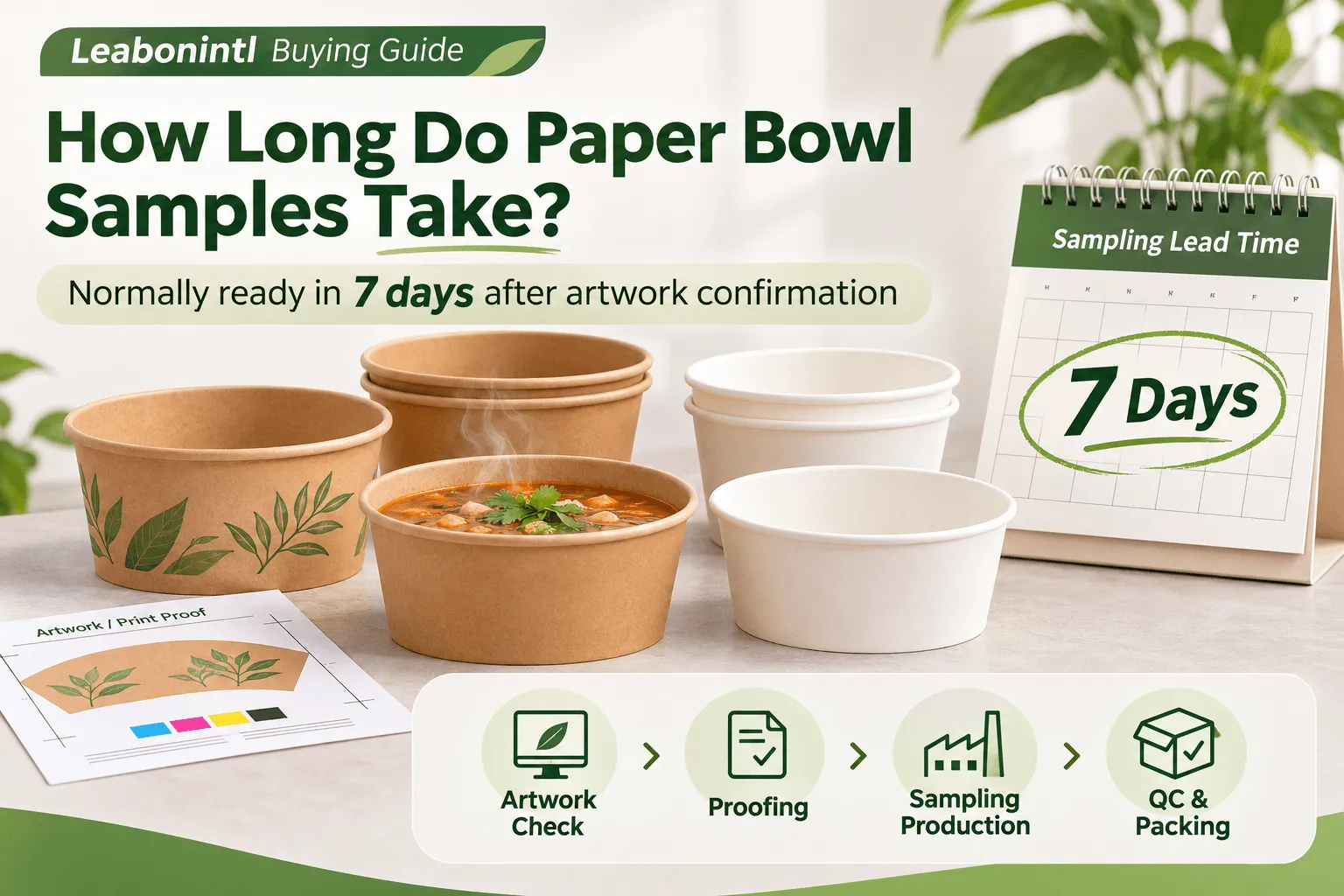
- Sizes and MOQ: the same size range applies, and custom printing runs at an MOQ of 30,000 pcs per size and artwork for either board. Samples take about 7 days; bulk production runs around 30 days after sample/order confirmation.
- End of life — read this carefully: a bowl’s disposability depends on its coating, not its board color. Kraft is unbleached, but a kraft bowl with a PE lining is not automatically compostable, and a white bowl is not automatically worse. Judge the coating and your market’s waste stream, not the color.
How to Choose
- Your brand colors are bright, pastel, or must match an existing product line exactly → white.
- Your identity is earthy, minimal, or ingredient-led, and your artwork uses bold dark tones → kraft.
- Your food is the hero and sells through photos → test both with your real dishes, then decide.
- You run two concepts (say, a salad line and a dessert line) → it is normal to use kraft for one and white for the other.
FAQ
Can you print white designs on kraft bowls?
Yes, but not by default. White on kraft requires white ink or an opaque underbase printed before your colors, since CMYK alone has no white. Flag white elements at the proofing stage so the setup is planned.
Do brand colors look the same on kraft?
No. The brown base shifts colors warmer and darker, and light tones lose the most. Bold and dark colors hold up well; pastels and bright primaries change noticeably. A physical proof is the reliable way to approve colors.
Is kraft more environmentally friendly than white?
Kraft board skips the bleaching step, a real difference in board production. But a finished bowl’s profile is driven mainly by its barrier coating and local disposal options. Kraft is not automatically compostable — judge the full construction, not the color.
Does kraft cost more or less than white?
The boards themselves are similarly priced, so the base cost is comparable. Where cost can differ is print setup: designs needing white ink or an underbase on kraft add a plate and setup step. Send us your artwork and we will quote the exact configuration.
Which paper bowl is better for full-color logo printing?
White paper bowls are often preferred for bright colors, detailed graphics, and pastel designs. Kraft bowls are suitable for bold, dark, and minimalist artwork. Final results should be approved through printed samples.
Can kraft and white paper bowls use the same lids?
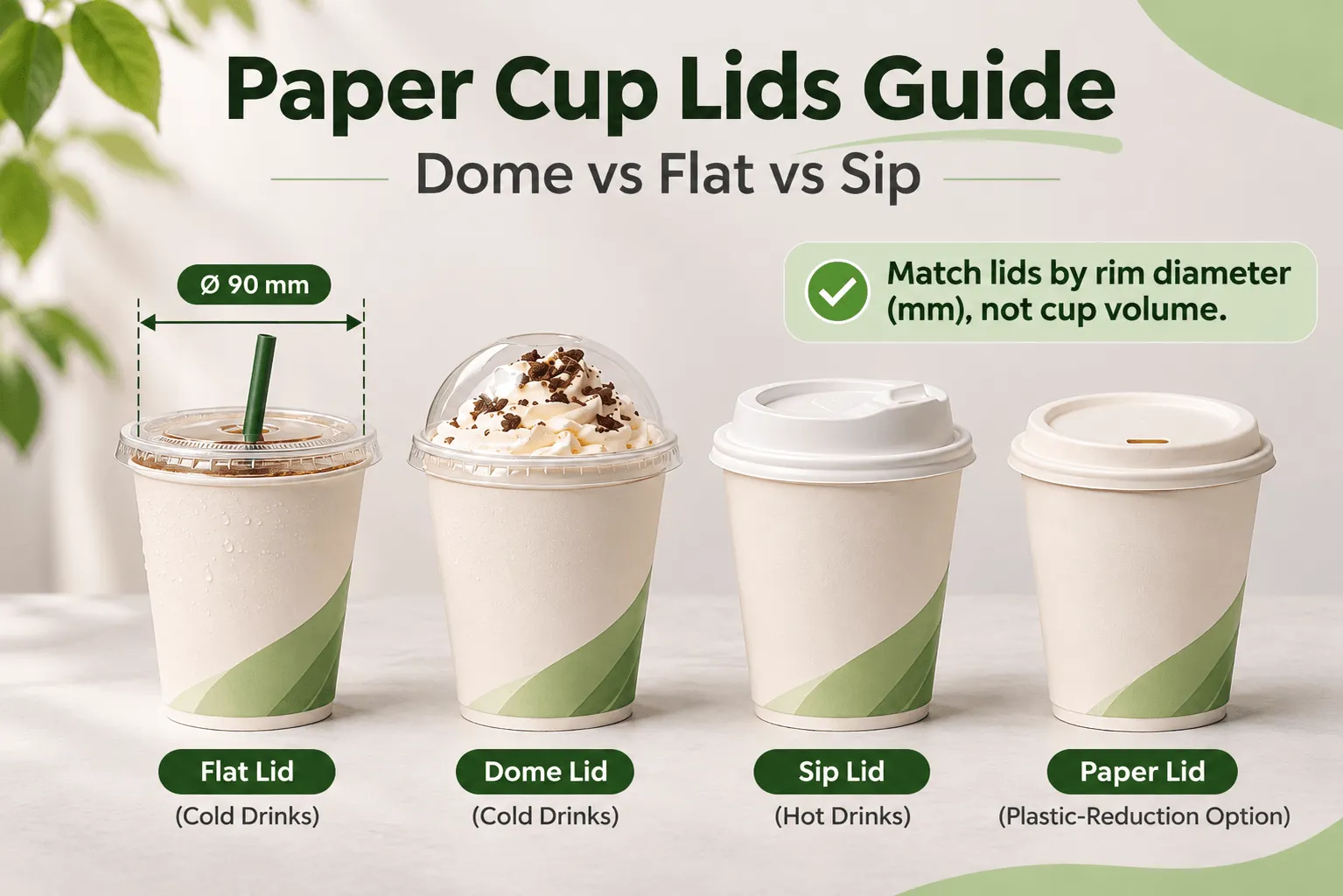
They may use the same lids when their rim dimensions and profiles are compatible. Lid fit should always be confirmed using actual samples.
What is the MOQ for custom printed kraft and white paper bowls?
The typical MOQ is 30,000 pieces per size and artwork. Final quantities depend on the selected bowl structure, material, and printing requirements.
Can I request samples in both kraft and white paper?
Yes. Sampling can be arranged to compare the appearance, printing results, and material options before bulk production. Sample availability and costs depend on the specifications.
Still deciding between kraft and white? Get a free quote with your artwork and menu, and we will proof your design on both boards — samples in about 7 days — so you can compare print, feel, and food presentation before committing to 30,000 pcs.
Not Sure Which Paper Bowl Fits Your Brand?
Compare kraft and white paper bowls with custom printing samples.
Share your artwork, bowl size, and order quantity for a tailored quotation.