
Four – Color, Spot Color, vs Monochromatic Printing for Disposable Paper Bowls, Cups & Buckets | Leabonintl
In the world of disposable paper products manufacturing, leabonintl, a leading paper bowl factory, understands the significance of choosing the right printing method. The printing technique you select can greatly impact the visual appeal, brand representation, and cost – effectiveness of your disposable salad bowls, soup buckets, and paper cups. This guide aims to explore the differences among four – color, spot color, and monochromatic printing, helping you make an informed decision for your paper product printing needs.
What Is Four – Color Printing?
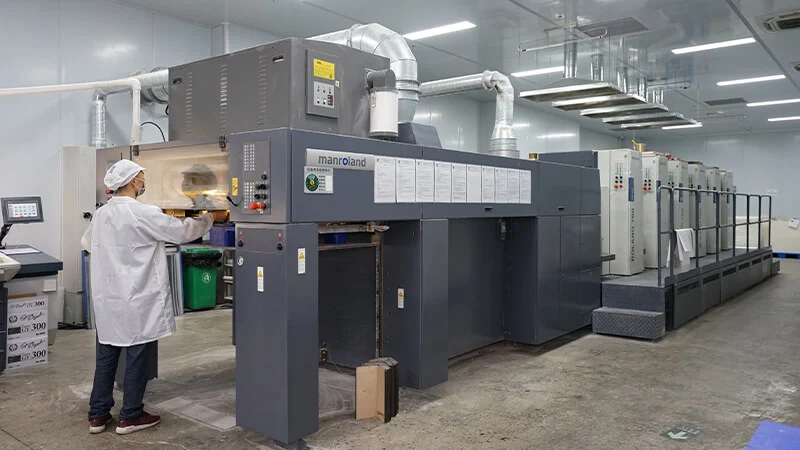
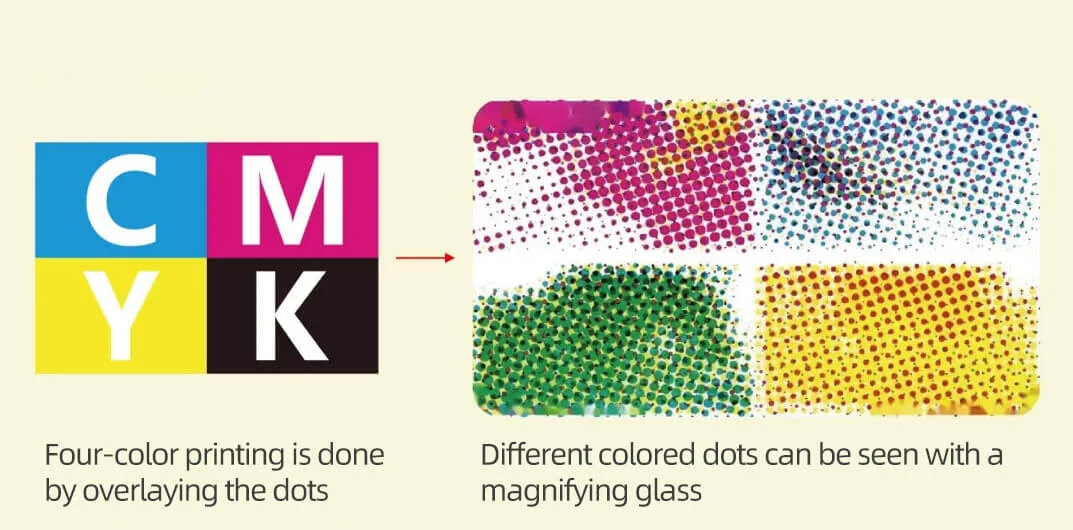
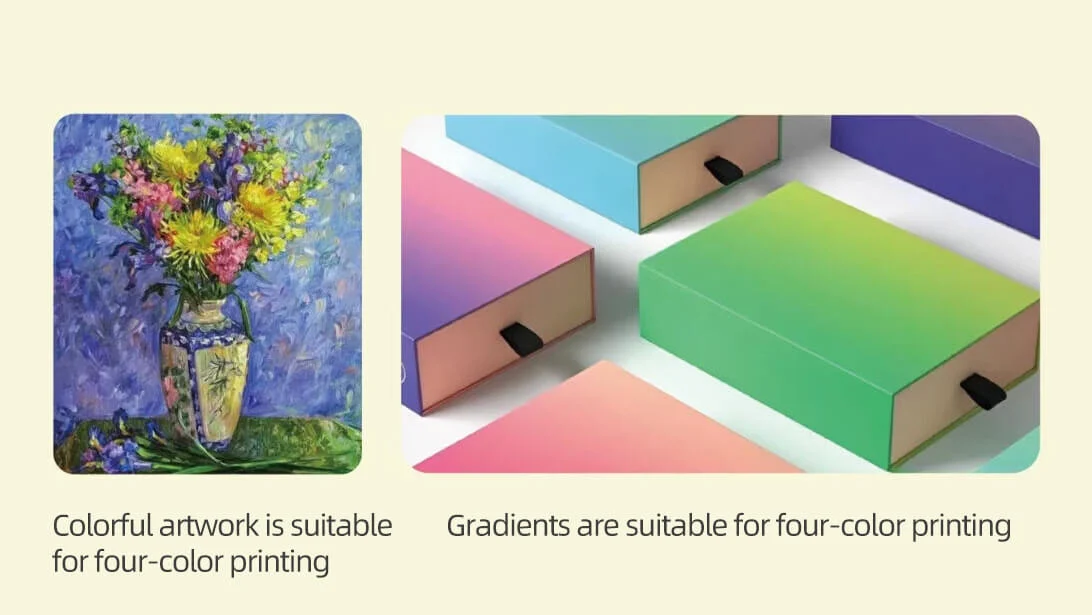
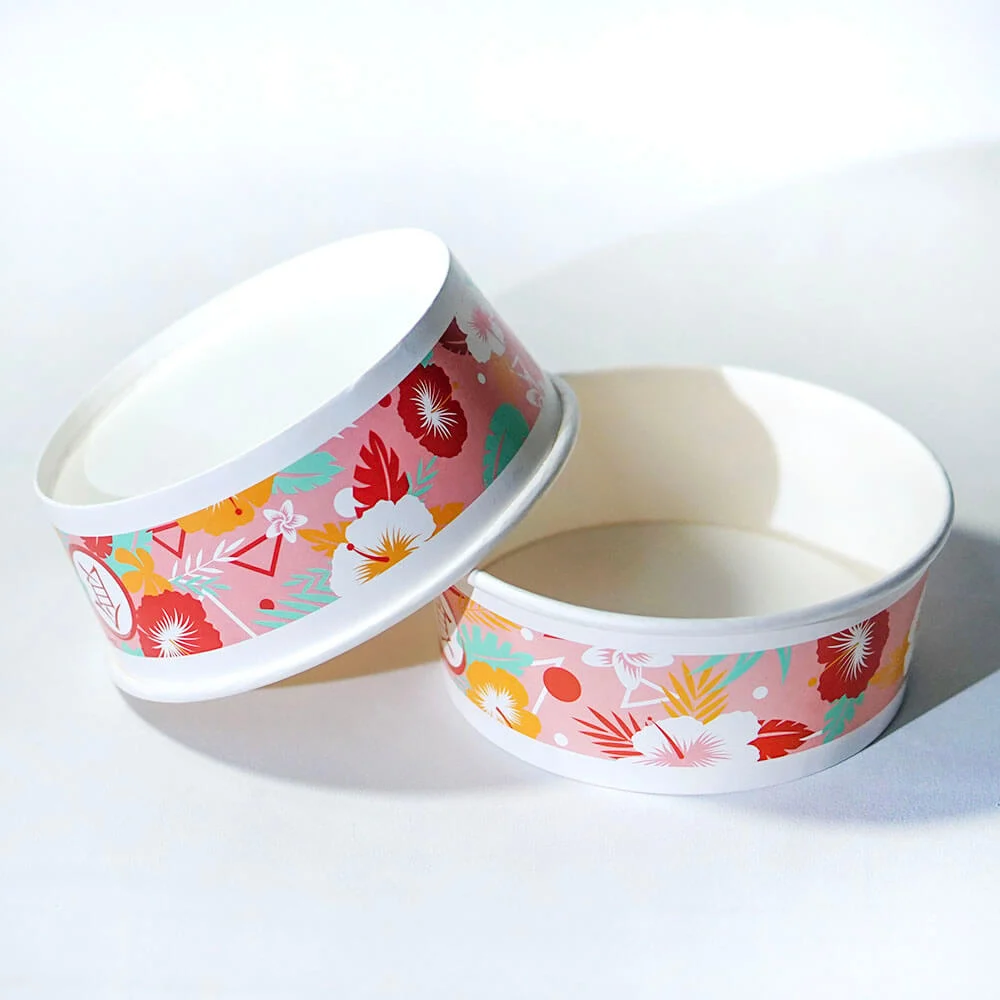
Four – color printing, also known as CMYK printing (derived from cyan, magenta, yellow, and black), is a prevalent method for replicating full – color images and intricate designs. For disposable paper products like salad bowls, this technique offers several advantages.
How It Works
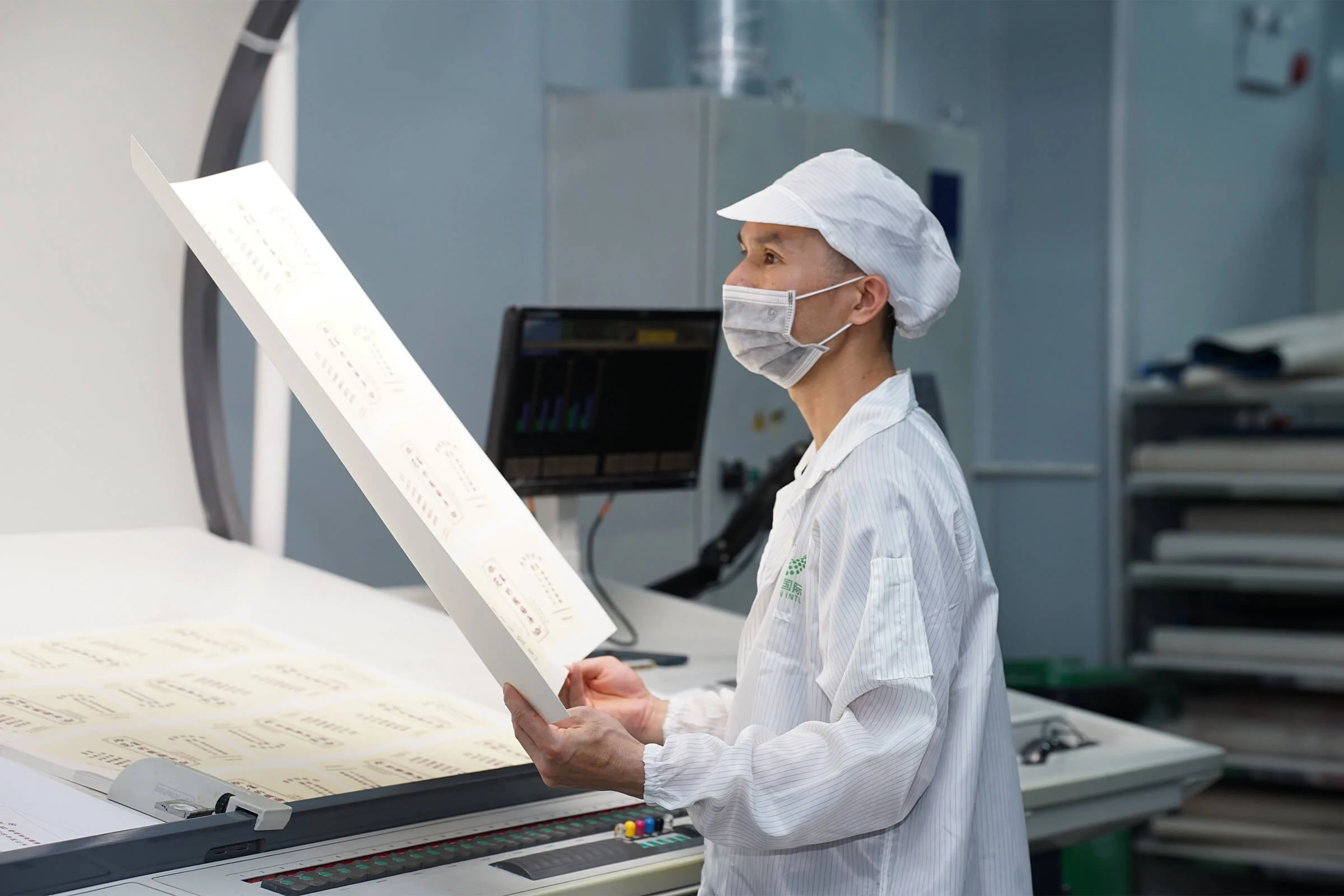
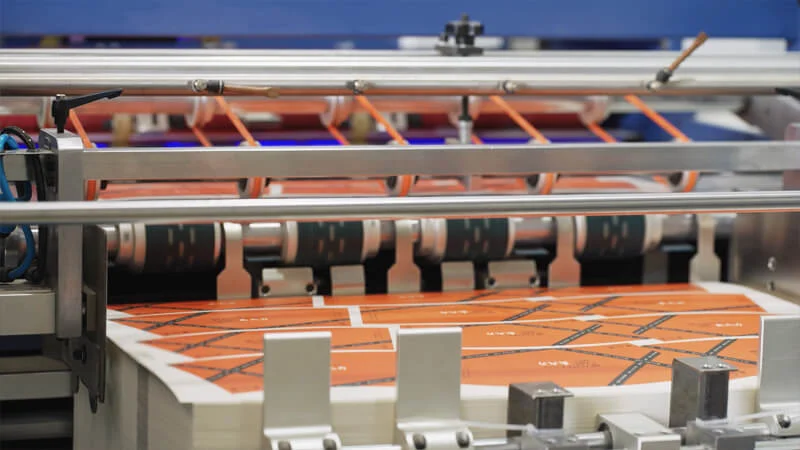
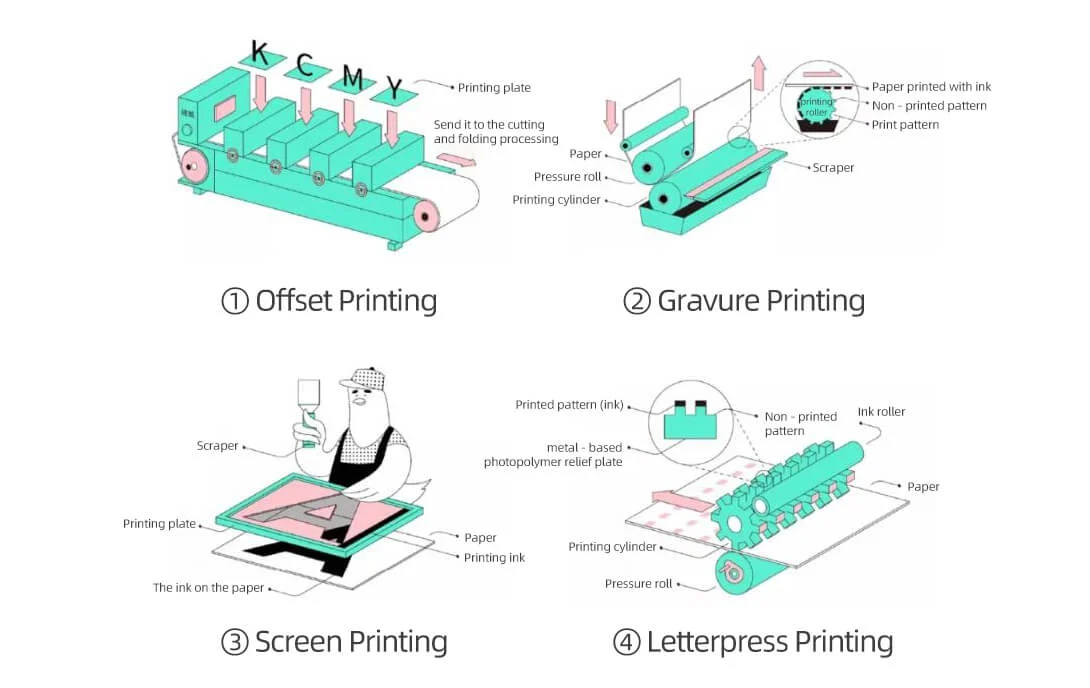
The process is founded on the subtractive color model. By layering cyan, magenta, yellow, and black inks in varying densities, a broad spectrum of colors can be achieved. For instance, when printing a salad bowl, the diverse colors of the fresh ingredients within the bowl, such as the green of lettuce, the red of tomatoes, and the purple of carrots, can be vividly reproduced. The design is initially separated into four color channels (CMYK) using specialized software. Each channel is then transferred onto a printing plate, and the inks are applied one by one onto the paper substrate. As the inks blend, the human eye perceives a seamless, full – color image.
Advantages of Four – Color Printing
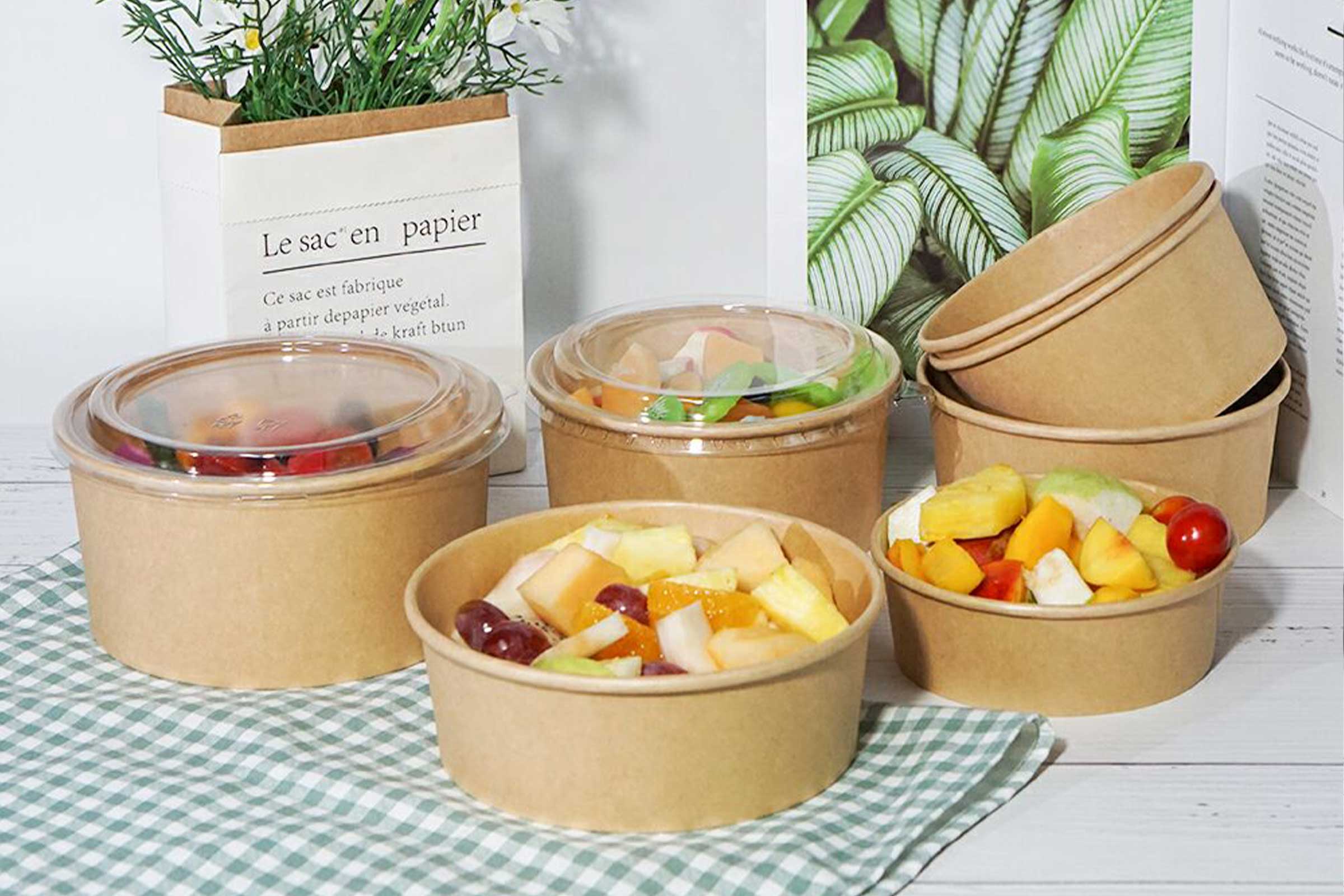
- Vibrant Color Reproduction: Ideal for products where visual allure is essential, like salad bowls with a clear window to showcase the colorful salad inside. It can precisely capture the rich hues of fresh produce, making the product more appealing to consumers.
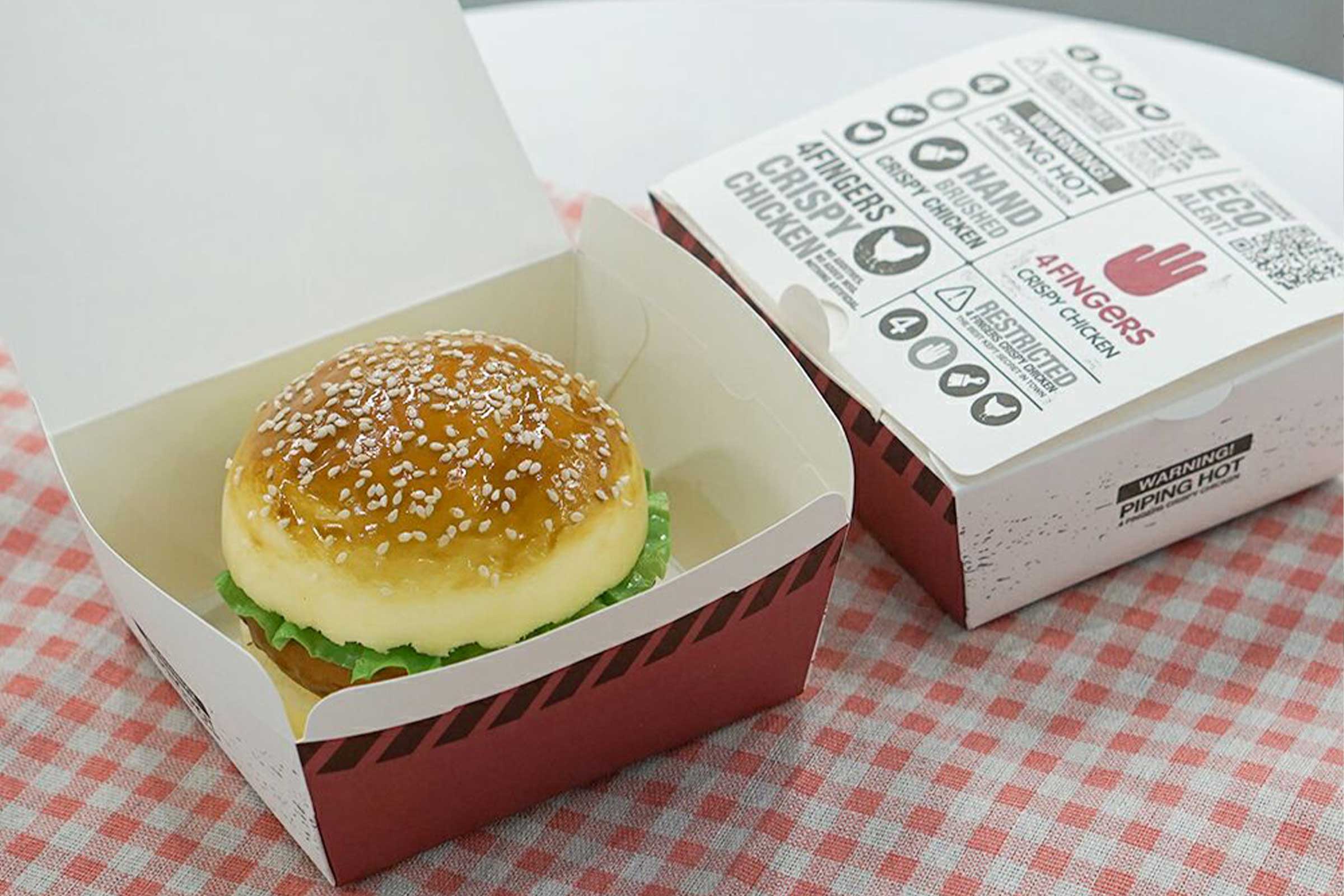
- Cost – Efficiency for Complex Designs: If your paper product, such as a soup bucket with a multi – colored brand logo and detailed nutritional information graphics, has complex design elements, four – color printing can be more economical than using multiple spot colors. Instead of paying for each additional spot color, you rely on the four standard CMYK inks.
Disadvantages of Four – Color Printing
- Color Accuracy Challenges: Achieving precise color matching can be difficult. Results may vary depending on factors such as ink quality, the type of paper substrate, and the printing equipment. This can be a concern for brands with strict color guidelines, especially when it comes to maintaining brand – specific colors across different print runs.
- Limitations with Solid Colors: While excellent for gradients and photos, four – color printing may struggle to produce deep, opaque solid colors. Bright colors like a vivid red or a neon – like yellow may appear less intense compared to spot color alternatives.
Ideal Use Cases for Four – Color Printing
- High – End Salad Bowl Packaging: To display the fresh and colorful contents of the salad, attracting health – conscious consumers.
- Information and Branding: When the soup bucket needs to convey detailed nutritional information along with an eye – catching brand logo and product images.
What Is Spot Color Printing?
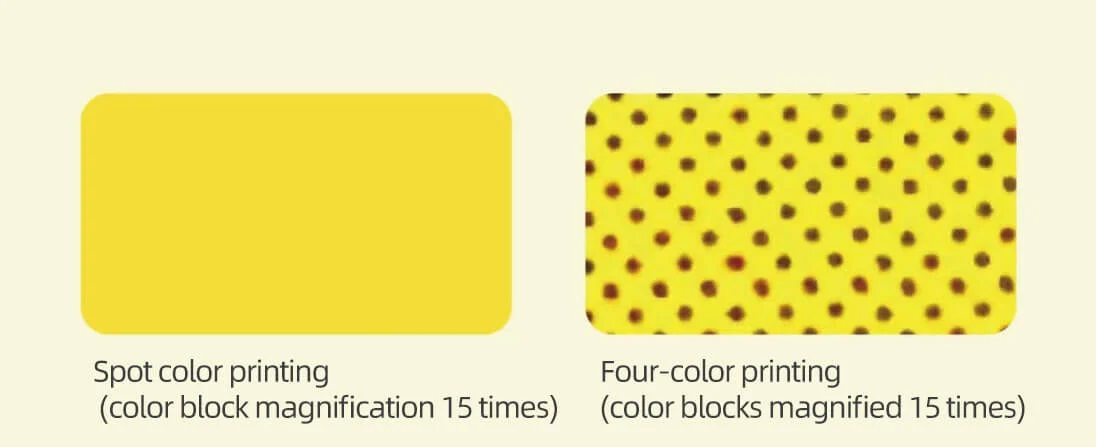
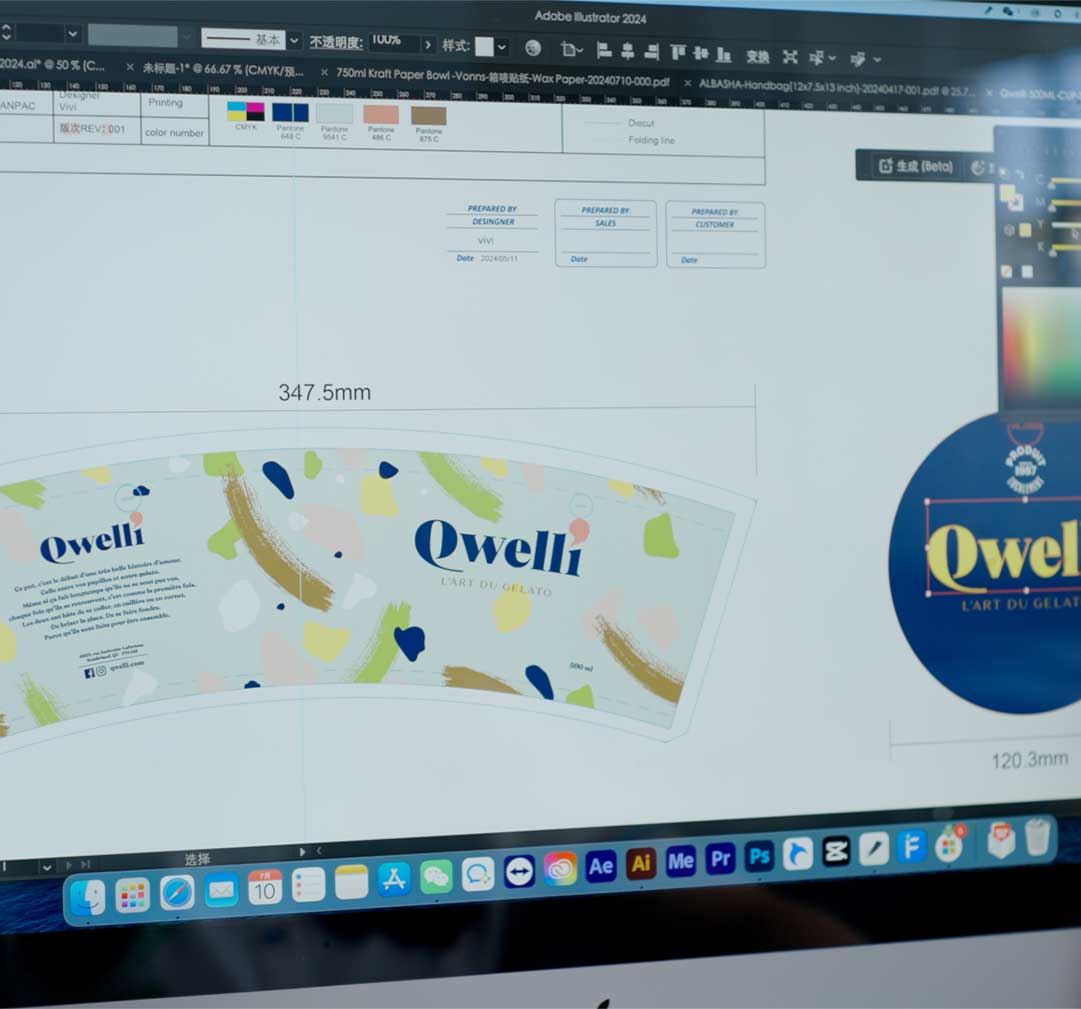
Spot color printing involves the use of pre – mixed, specific inks to achieve exact color matches. These inks are often selected from standardized color systems like the Pantone Matching System (PMS). For disposable soup buckets and paper cups, this method provides distinct benefits.
How It Works
Unlike four – color printing, spot color printing uses a single, pre – mixed ink for each color in the design. For example, if a company has a unique brand color for its logo on a soup bucket or a special color for the text on a paper cup, a dedicated spot color ink is mixed to match the exact PMS code. Each spot color requires its own printing plate, and the inks are applied in separate passes during the printing process.
Advantages of Spot Color Printing
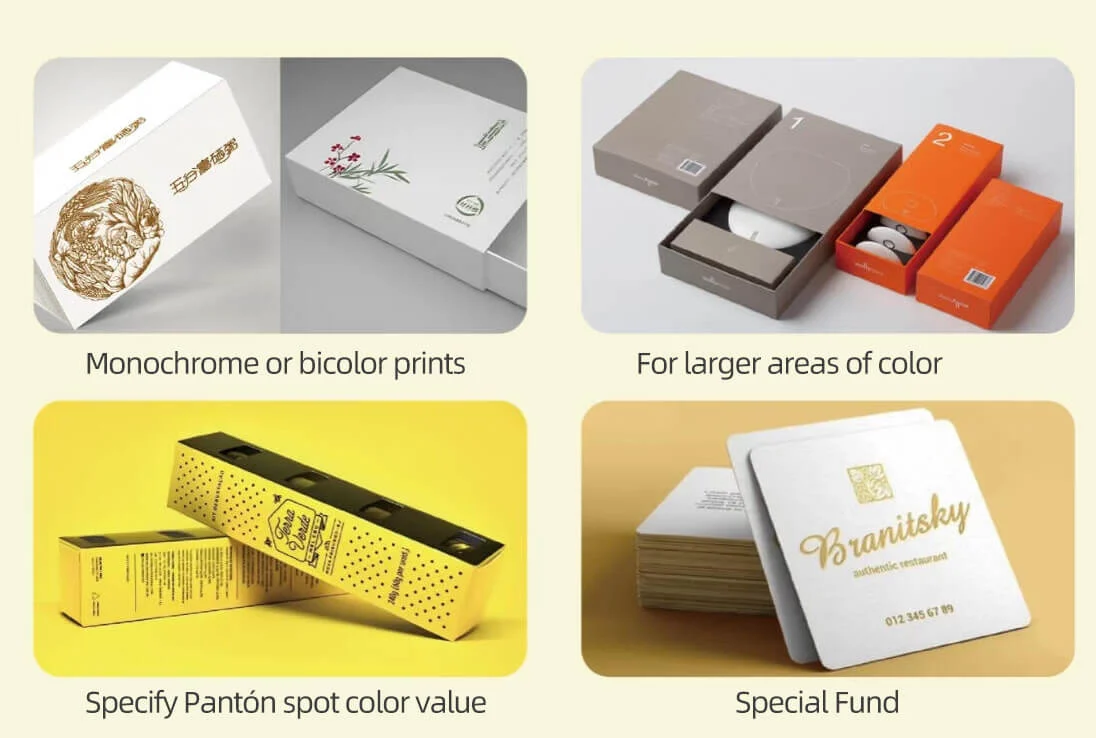
- Precise Color Consistency: This is crucial for maintaining brand identity. For brands with a specific brand color, like a unique blue for their logo on paper cups, spot color printing ensures that the color is reproduced identically across all products, regardless of the print run.
- Vibrant and Opaque Solids: Spot color inks can create rich, deep solid colors. A bright red or a metallic finish on a soup bucket label can be achieved with spot color printing, making the product stand out on the shelf.
- Cost – Effectiveness for Simple Designs: If your paper product design uses only 1 – 3 colors, such as a logo on a paper cup or a simple pattern on a soup bucket, spot color printing can be more cost – effective than four – color printing.
Disadvantages of Spot Color Printing
- Higher Costs for Multiple Colors: Each additional spot color requires a separate plate and ink, which can quickly increase costs if your design has four or more colors. In such cases, four – color printing may be more economical.
- Limited to Solid Colors: Spot color printing is not well – suited for reproducing gradients, photos, or designs with subtle color variations. It is best used for flat, solid – color elements.
Ideal Use Cases for Spot Color Printing
- Brand Identity Materials: Logos on paper cups, business – card – sized labels on soup buckets, where color accuracy is of utmost importance.
- Simple Graphics on Disposable Products: A single – color barcode or a simple logo on a disposable paper cup.
What Is Monochromatic Printing?
Monochromatic printing, as the name implies, utilizes a single color of ink, typically black, but it can also be another color such as navy blue or forest green. This method creates designs by varying the density of the single ink or using halftone patterns to simulate different shades. For economy – focused disposable paper cups and salad bowls in large quantities, this approach has its merits.
How It Works
The process involves applying a single ink color in different intensities. For example, on a disposable paper cup, a solid color can be used for the text, and a lighter shade of the same color (achieved by reducing ink density) can be used for the background or decorative elements. Halftone dots are used to create the illusion of gradients between the light and dark areas of the single color.
Advantages of Monochromatic Printing
- Cost – Effective: Requiring only one ink and one printing plate, monochromatic printing is one of the most budget – friendly options. This makes it ideal for large – scale production of disposable paper products, such as those used in schools or low – cost catering services.
- Timeless Aesthetic: Monochromatic designs exude a classic and professional look, which can be suitable for formal or traditional – looking disposable products, like those used in business meetings or formal events.
Disadvantages of Monochromatic Printing
- Limited Visual Appeal: Without the use of multiple colors, monochromatic designs may appear less engaging or dynamic, which could be a drawback for marketing – oriented disposable products.
- Not Ideal for Photos or Complex Graphics: Reproducing photos or complex graphics in monochrome can result in a loss of detail, as there are no colors to distinguish different elements.
Ideal Use Cases for Monochromatic Printing
- Economy – Class Disposable Paper Cups: For use in settings where cost is a primary concern, such as in large – scale cafeterias or food trucks.
- Simple – Designed Salad Bowls for Budget – Conscious Consumers: When the focus is on affordability rather than elaborate design.
Comparing the Three: How to Choose?
Now that we’ve explored each method in detail, let’s summarize their key differences to assist you in choosing the most suitable printing method for your disposable paper products.
| Factor | Four – Color Printing | Spot Color Printing | Monochromatic Printing |
|---|---|---|---|
| Best For | Products with complex, full – color designs like salad bowls showing ingredients, and soup buckets with detailed graphics. | Brand – identity – focused products with 1 – 3 solid colors, such as logo – heavy paper cups and soup bucket labels. | Budget – conscious products with simple text – based or minimalist designs, like economy – class disposable paper cups. |
| Color Range | Full spectrum via CMYK blending | Exact, pre – mixed colors from systems like PMS | Single color with varying shades |
| Cost | Affordable for multi – color designs. Becomes more cost – effective as the number of colors in the design increases. | Cost – effective for 1 – 3 colors; expensive for more. Cost rises significantly with each additional spot color. | Most budget – friendly, especially for large print runs. |
| Color Consistency | Variable; may have slight differences between print runs. Depends on ink, substrate, and equipment. | High; ensures consistent color reproduction across print runs when using standardized color systems. | High; minimal variation as only one ink is used. |
| Special Effects | Limited, but can create some gradients. | Limited, but can create some gradients. | None, limited to variations of a single color. |
Final Tips for Choosing the Right Printing Method
In conclusion, understanding the differences between four – color, spot color, and monochromatic printing is crucial for producing high – quality disposable paper products. Whether you’re a paper bowl factory looking to enhance the packaging of your salad bowls, soup buckets, or paper cups, or a business owner seeking the perfect printing solution for your disposable tableware needs, choosing the right method based on your design, budget, and brand requirements is key.
If you have further questions or need assistance in determining the most suitable printing method for your specific disposable paper products, don’t hesitate to reach out to our team of experts. We’re here to help you make the best decision for your business.
[For details on our salad bowls, check out ]