
Quick Answer: How to Choose Paper Ice Cream Bowls and Cups
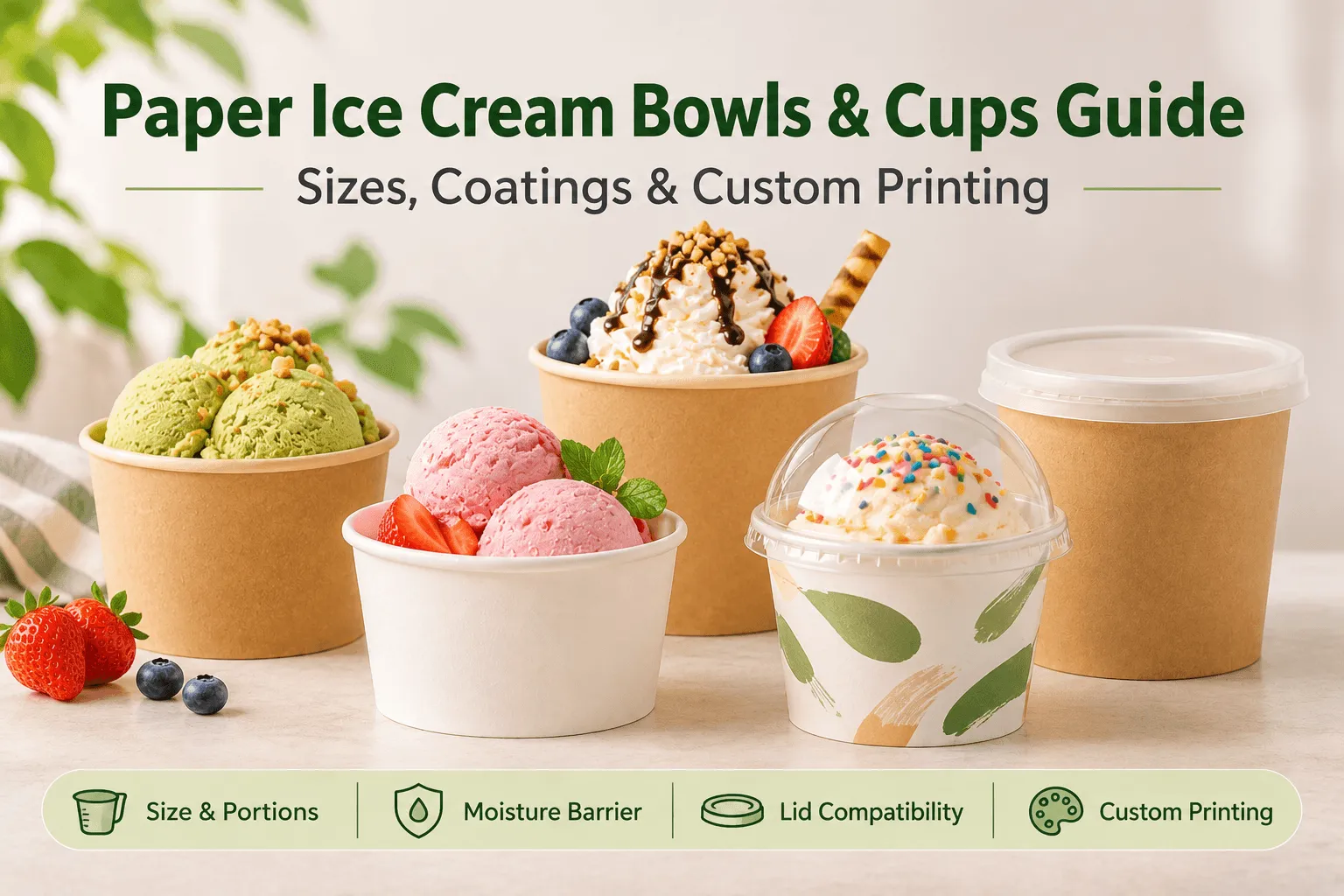
Choose paper ice cream bowls based on serving size, freezer suitability, moisture resistance, lid compatibility, and custom printing requirements.
- Sizes: Small cups for tastings, medium bowls for individual servings, and larger tubs for sundaes or takeaway.
- Coatings: Suitable barrier coatings help protect against melting ice cream and condensation.
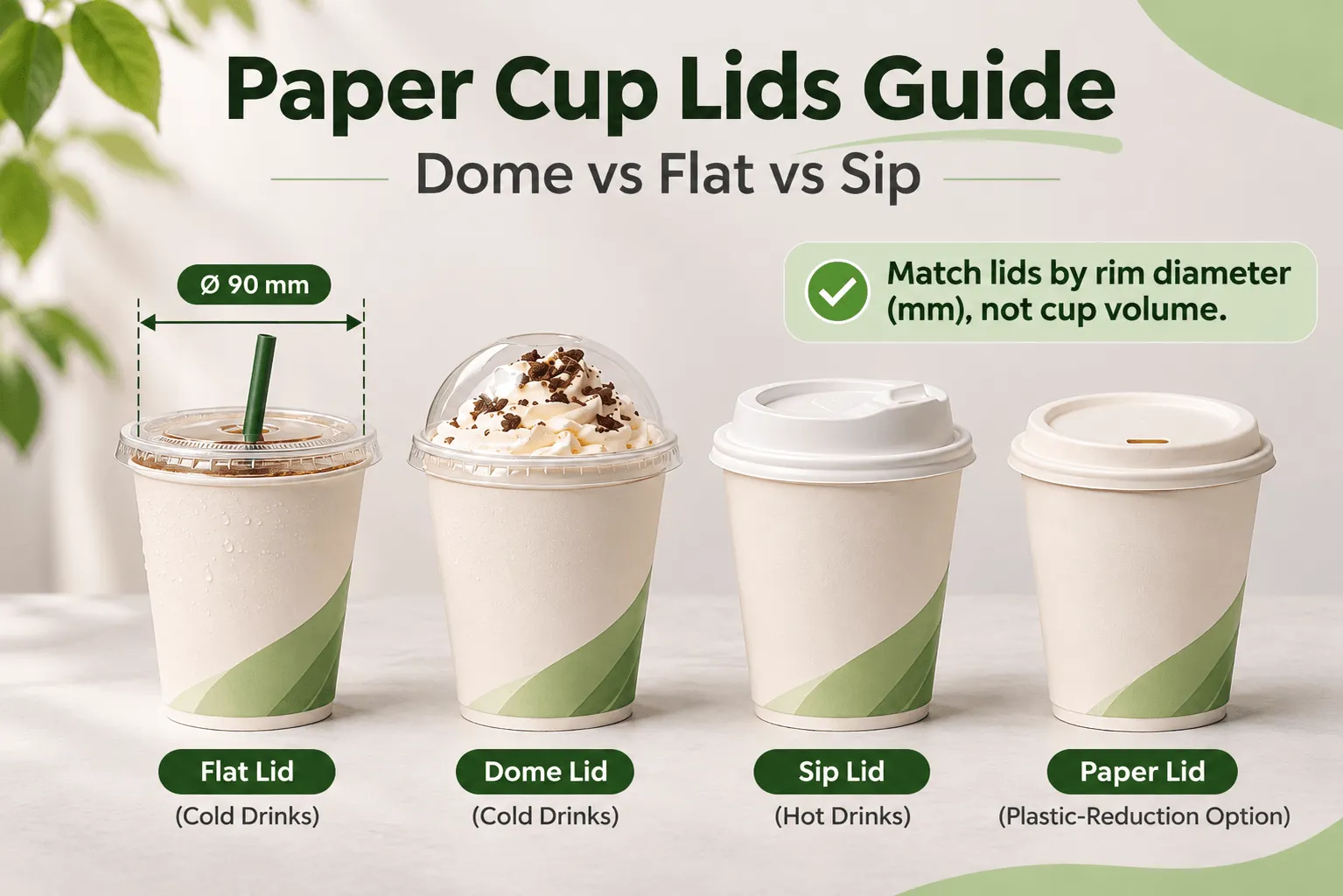
- Lids: Flat lids are commonly used for storage, while dome lids provide extra room for toppings.
- Printing: Custom logos and full-wrap designs support branded dessert packaging.
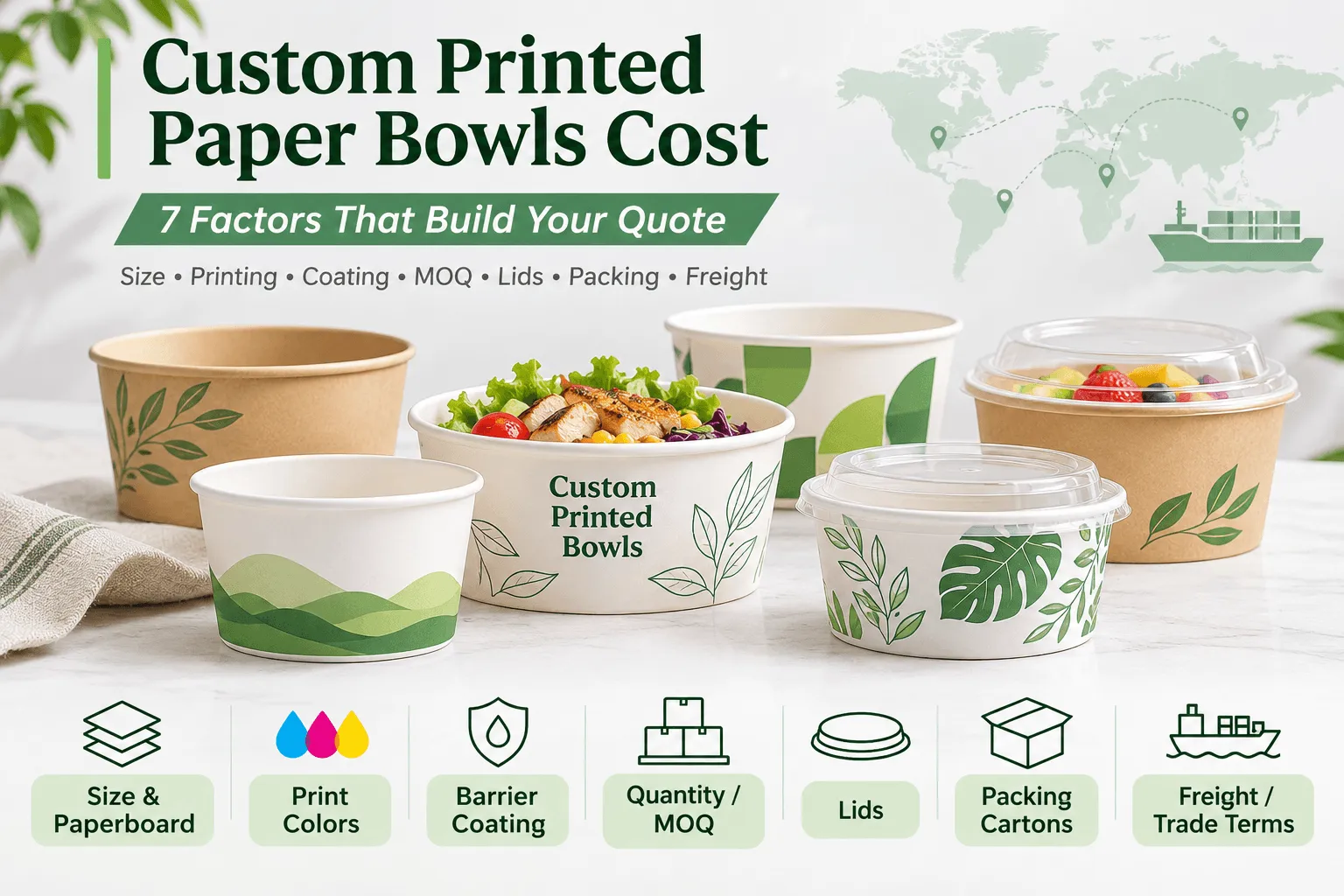
At Leabonintl, the standard MOQ for custom printed paper ice cream bowls is typically 30,000 pieces per size and artwork.
Sampling normally takes around 7 days after artwork confirmation, subject to product specifications.
Sizes: From Tasting Cups to Sharing Tubs
Ice cream sizes are described in ounces, but the same “8 oz” can mean different rim diameters and heights by supplier. Treat the ranges below as common market sizes, not any one factory’s catalog:
Paper Ice Cream Bowl Size Guide
Common Size Typical Application Buying Consideration 3–5 oz Tastings, small portions Portion control 6–8 oz Single or double scoops Space for toppings 10–12 oz Sundaes, larger servings Bowl rigidity 12–16 oz+ Takeaway and sharing tubs Lid fit and freezer storage Always confirm actual capacity, rim diameter, bowl height, and lid compatibility before ordering.
Two practical rules. First, match the bowl to the serve: a scoop that looks generous in a 6 oz bowl looks lost in a 12 oz tub. Second, confirm the supplier’s actual size chart — rim diameter decides lid fit, and height decides stacking and shipping. See the formats in our ice cream bowls category, then sample the sizes you plan to run.
What Frozen Desserts Demand From a Bowl
Frozen dessert is harder on paper than most foods. Four things matter:
- Freezer storage. Bowls are stocked, transported, and sometimes pre-filled and stored frozen. The board must stay rigid at low temperatures — firm enough to stack and hold its shape.
- Condensation on the outside. The moment a frozen bowl meets warm air, moisture beads on the outer wall — affecting grip, hand feel, and whether the print stays clean.
- Spoon pressure on the rim. Ice cream is eaten with force — customers scrape, dig, and lever against the rim. Rim roll strength and board weight decide whether the bowl dents, flexes, or holds.
- Melt. Halfway through the serve, part of the product is liquid — from then on the bowl is holding a wet food, and the barrier coating does the work.
A well-made ice cream bowl is designed for all four — but prove it with your own product: fill samples, freeze them under your storage conditions, and serve from them as your customers will.
Coatings for Ice Cream: Why Double-Sided Matters
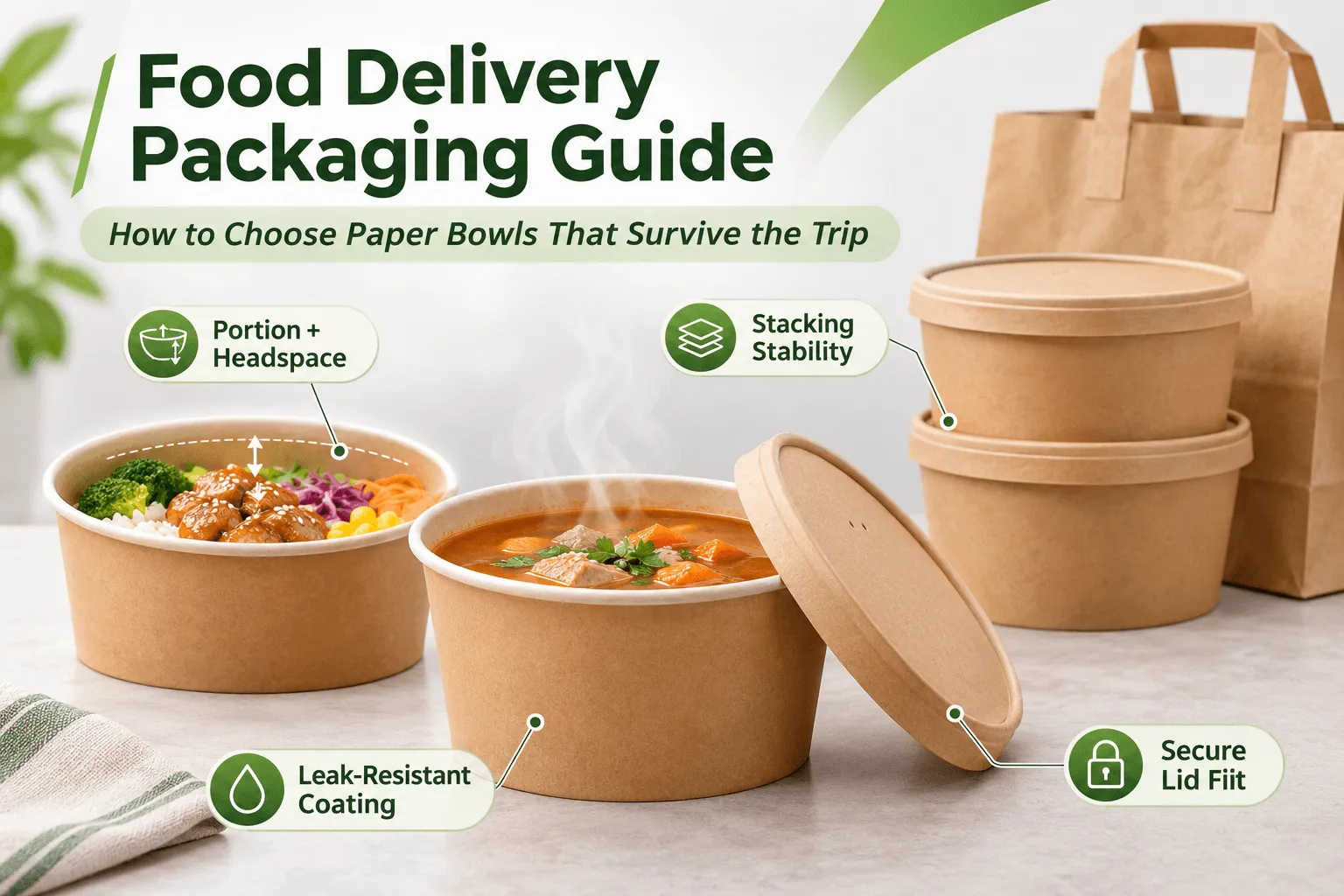
PE coating is the standard barrier for frozen and moist applications. The inner coating keeps melt from soaking into the board during the serve; the outer coating resists condensation on a cold bowl in warm air — which is why ice cream bowls are commonly coated on both sides, not just inside.
PE is not the only option. We offer PE, PLA, and water-based coatings, and the right choice depends on your market and positioning. If you are weighing the trade-offs, our comparison of PE vs PLA vs water-based coatings covers cost, performance, and market fit.
Lids: Flat for Storage, Dome for Toppings
- Flat lids suit freezer storage, stacking, transport, and takeaway pints — a tight fit keeps a retail-style tub neat in the freezer cabinet.
- Dome lids leave headroom above the rim — for whipped cream, toppings, or a scoop that sits proud of the bowl. The takeaway choice for sundaes.
Test any lid on the actual bowl — and again after freezing, since rim diameters vary between suppliers. Dine-in sizes may not need lids at all.
Custom Printing: The Bowl Is Your Storefront
A gelato shop may have no signage a customer carries away — the cup is what gets photographed, held in the street, and seen by the next customer. Full-wrap, full-color printing turns it into a storefront: flavor colors, logo, and story, all the way around the bowl.
One planning rule: each design is its own artwork, and the MOQ applies per size and artwork. Six flavor designs in one size means six print setups, so most brands print core flavors custom and use a shared house design for rotating flavors. For the full path from file to finished bowl, see our walkthrough of the custom printed food packaging process.
Who Buys Paper Ice Cream Bowls
The main buyers are gelato shops and ice cream parlors (serve sizes and print first), frozen yogurt and dessert bars (toppings formats, dome lids), food trucks and market stalls (compact ranges, takeaway lids), and supermarket private label (lidded tubs that must look retail-ready in a freezer cabinet). What changes between them is the mix of sizes, lids, and designs.
FAQ
Can paper bowls go in the freezer?
Paper ice cream bowls are designed for freezer storage — board and coating are chosen for low temperatures and the condensation that follows. Always test with your own product and conditions: fill samples, freeze them for your real storage time, and check rigidity, lid fit, and print before a bulk run.
What size is standard for a single scoop serving?
In most markets, a single-serve bowl is around 6–8 oz for one or two scoops, with 3–5 oz cups used for tastings and kids’ portions. Ounce labels vary between suppliers, so confirm the actual dimensions on the supplier’s size chart rather than ordering on the number alone.
Do ice cream bowls need a special coating?
They need a barrier that handles two kinds of moisture: melting product inside and condensation outside. PE is the standard choice for frozen applications, and ice cream bowls are commonly coated on both sides. PLA and water-based coatings are also available if your positioning calls for them.
Can I print different designs for different flavors?
Yes — full-wrap printing is per design, so each flavor can have its own artwork. Keep in mind the MOQ of 30,000 pcs applies per size and artwork, so plan your flavor count accordingly: custom designs for core flavors, one shared design for seasonal rotations.
Can paper ice cream bowls use PET dome lids?
Yes, compatible PET dome lids can be used for ice cream bowls with toppings. Always confirm the rim diameter, rim profile, and lid fit using actual samples.
What should I test before ordering ice cream paper bowls in bulk?
Test freezer storage performance, condensation resistance, bowl rigidity, printing appearance, and lid compatibility under your intended conditions.
Are kraft or white paper ice cream bowls better for custom printing?
White paper generally provides a more neutral surface for bright colors and detailed artwork. Kraft paper offers a natural brown appearance but may affect printed colors. Physical proofs are recommended.
Planning an ice cream or gelato packaging range? Get a free quote — tell us your serves, sizes, flavors, and lid needs, and we’ll recommend a board, coating, and print setup. Samples take about 7 days, so you can freeze-test real bowls before bulk production starts.
Looking for Custom Ice Cream Bowls?
Share your preferred sizes, printing design, order quantity, and lid requirements.
Leabonintl helps ice cream brands and packaging distributors find suitable paper bowl solutions.