
Quick Answer: How to Choose Paper Bowls for Food Delivery
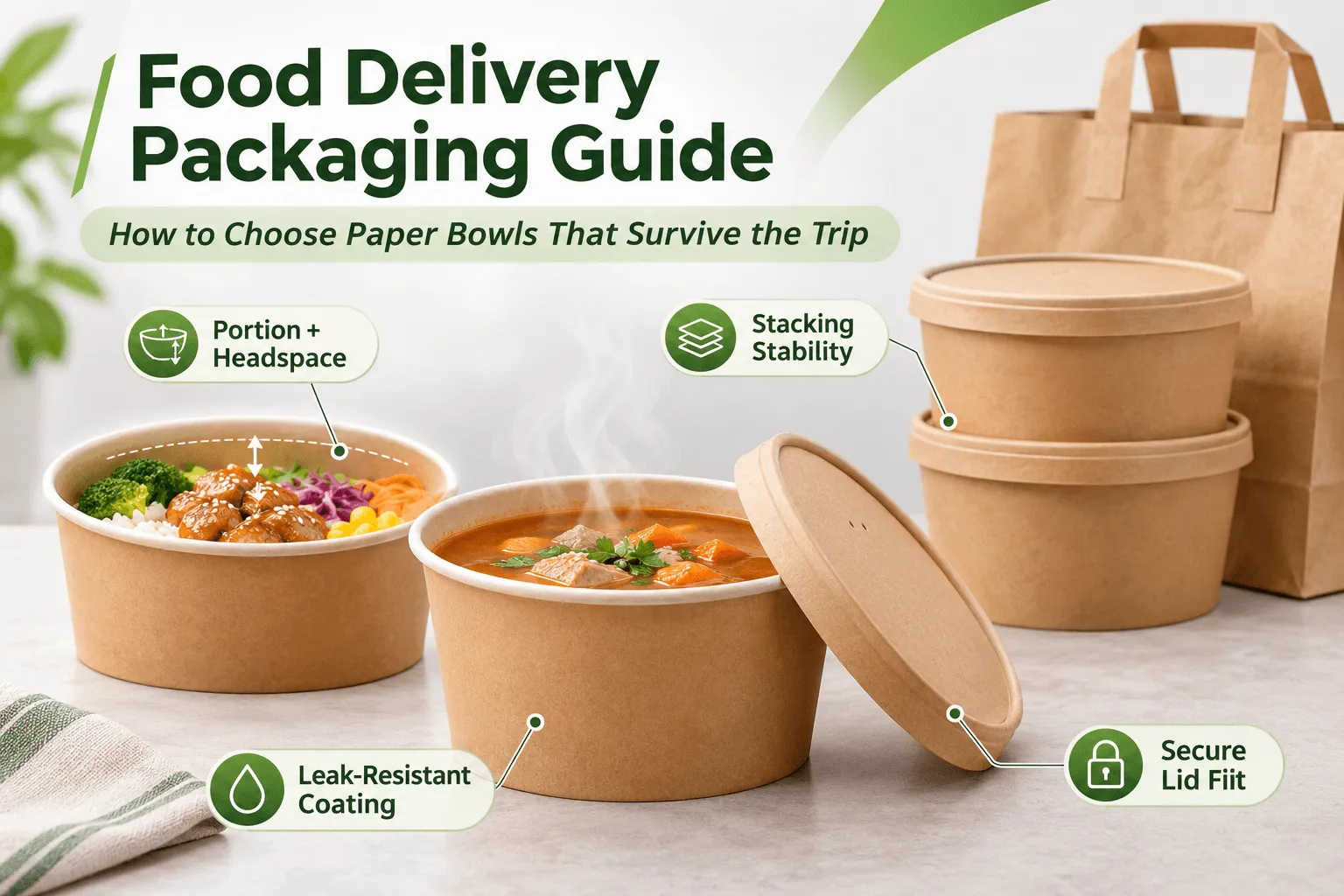
The best paper bowls for food delivery should offer reliable leak resistance, secure lid fit, suitable heat performance, and stable stacking.
When choosing takeaway paper bowls, check these five factors:
- Barrier Coating: Helps resist moisture and grease.
- Lid Fit: Reduces the risk of leaks during transport.
- Bowl Strength: Supports handling and stacking.
- Portion & Headspace: Prevents overfilling and lid pressure.
- Delivery Testing: Confirms performance with actual food and transport conditions.
Always test the complete bowl-and-lid combination before bulk ordering.
What the Delivery Journey Does to a Bowl
Counter service is forgiving: the bowl moves a few metres and gets eaten. Delivery is not. The bowl is filled hot, lidded, stacked with other orders, tipped into a courier bag, and carried — tilted, jostled — for your full delivery window, often 30 to 45 minutes, with steam building inside. Every weakness gets found: a coating flaw becomes a leak, a loose lid walks off, a thin wall softens and the stack leans. Choosing delivery packaging means choosing for that journey, not for the shelf.
Key Factors When Choosing Paper Bowls for Delivery
| Factor | What to Check | Recommended Test |
|---|---|---|
| Leak Resistance | Coating, bottom seal, side seam | Fill and tilt test |
| Lid Compatibility | Rim diameter and lid fit | Snap-fit and carry test |
| Heat Performance | Material and wall structure | Actual food temperature test |
| Stacking Stability | Bowl strength and lid support | Filled stacking test |
| Portion Capacity | Food volume and headspace | Actual portion test |
| Delivery Durability | Performance during transport | Full delivery simulation |
Leak Resistance: Coating Integrity and Rim Quality
A paper bowl holds liquid because of its barrier coating — PE, PLA or water-based — not because of the board. For delivery, two details matter more than the coating name. First, coating integrity: the barrier must be continuous, including at the base and the side seam, where forming stresses it most. Second, rim and forming quality: the rolled rim gives the bowl its stiffness and gives the lid something to grip. A poorly formed rim flexes — and a flexing rim breaks the lid seal. On samples, flex the bowl, inspect the seam, check the rim: they tell you more than a spec sheet. Our comparison of paper bowls vs plastic bowls goes deeper on coating choice for wet food.
Lid Fit: Snap Security and Steam Management
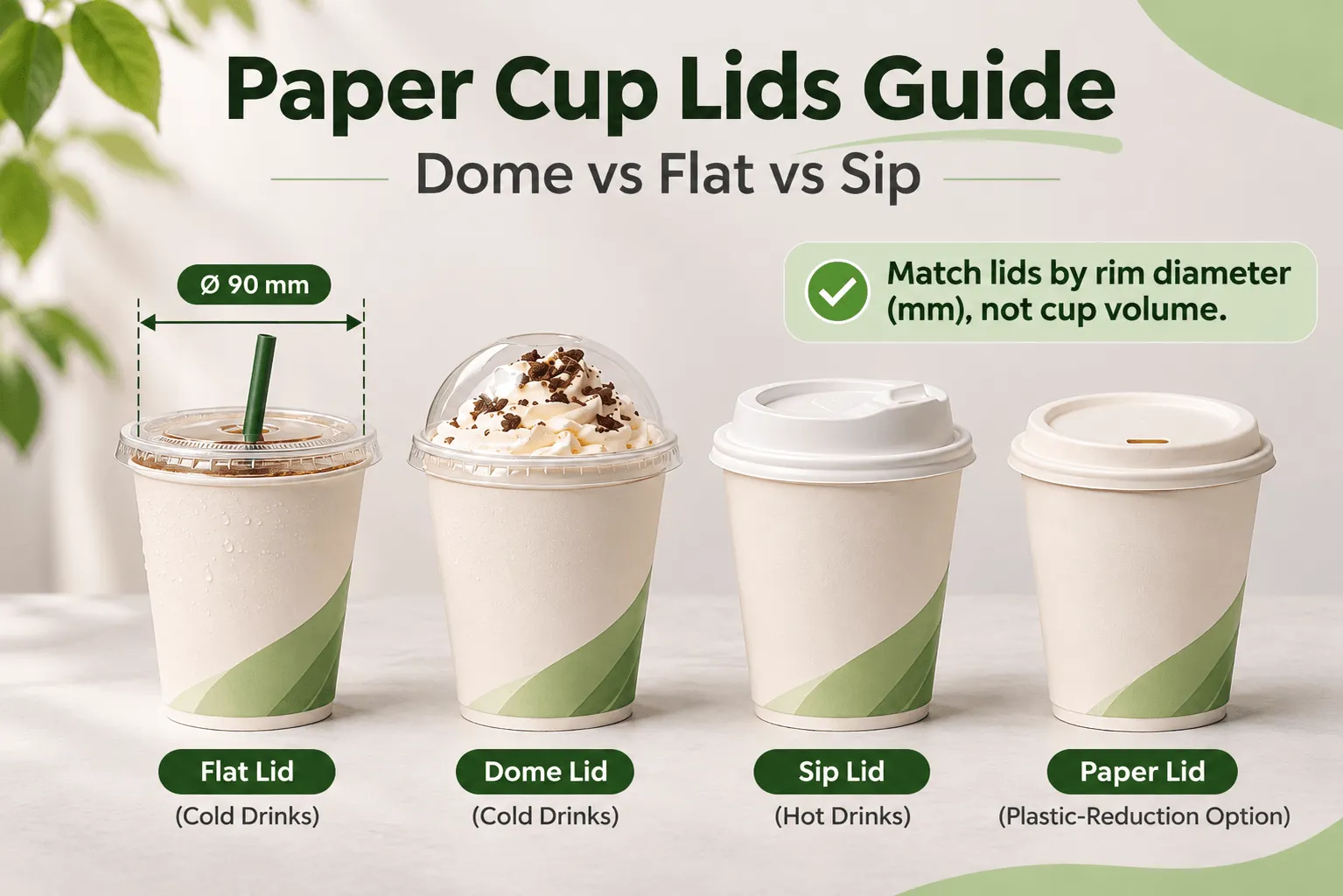
The lid is where delivery orders are won or lost, and it must do two jobs that pull in opposite directions: seal tightly enough to keep soup in when the bag tilts, and vent enough that steam escapes instead of condensing on the food. For soups and saucy dishes, prioritise the seal: a firm snap fit, tested tilted, not just pressed on at the counter. For fried or crispy items, prioritise venting: trapped steam turns crisp coatings soggy, so a vented lid protects texture at a small cost to heat. Fit must also survive stacking: a lid that pops under another bowl is a complaint waiting to happen. More in our guide to paper soup bowls with lids.
Heat Retention: Board Weight and Realistic Expectations
Paper insulates, but it is not a thermos. A standard single-wall bowl keeps food pleasantly hot across a normal delivery window; it will not hold serving temperature indefinitely, and no honest supplier should promise otherwise. Where heat matters, you have two levers. Heavier board slows heat loss and resists softening from steam. Double-wall construction adds an insulating air gap and a cooler outer surface to hold — a strong option for soups and hot mains, with kraft finishes for natural-look branding. Match the construction to the dish — the hotter and wetter the food, the more wall you want — then confirm it in the bag test below, timed to your longest real delivery.
Stacking and Case Packing
Delivery bowls live two lives. Empty, they should nest tightly, so small kitchens and dark stores hold plenty. Filled and lidded, they must stack securely — stable enough that a bag carrying three or four orders doesn’t turn into a landslide. Ask how the bowls are packed: case quantities, whether sleeves or dividers protect the printed surface, and whether the outer carton is strong enough for your distributor’s handling, not just the factory door. Weak cartons crush rims, and crushed rims don’t seal.
Sizing: Portion Plus Headspace
The most common delivery sizing mistake is filling the bowl to the brim. Food at the rim presses the lid, works against the seal with every tilt, and arrives looking disturbed. Size the bowl so the portion sits below the rim with clear headspace — that space is where steam collects instead of soaking the food. If you run several portion sizes, match each to its own bowl instead of under-filling one large size: a half-empty bowl sloshes, and sloshing tests lids hardest. For hot liquid dishes, start from a dedicated soup bowl range, where wall, rim and lid are designed together.
Test Like a Courier: A Sample Protocol
Catalogue claims don’t deliver food; bowls do. Before you commit, run this protocol with samples (ours take about 7 days) and your actual menu:
- Fill with the real dish, at serving temperature, to your real portion.
- Lid it the way your staff will, at service speed — not carefully.
- Tilt it, turn it, and put it in a delivery bag with other items.
- Carry it the way your couriers do — on foot, by bike, or by car.
- Hold it for your full delivery window, then open and judge: leaks, lid position, wall stiffness, texture, temperature.
Test your worst case — the hottest, wettest, longest-route dish — not your easiest. A bowl that survives that will survive your menu.
FAQ
What is the best paper bowl setup for soup delivery?
A purpose-built soup bowl: intact barrier coating, stiff rolled rim, tight snap-on lid, soup sitting below the rim. Add double-wall construction for long delivery windows, and validate the bowl-and-lid pairing with a tilt-and-carry test first.
How do I stop condensation making food soggy?
Manage the steam: vented lids for fried and crispy items, a brief vent before lidding very hot food, and headspace so steam isn’t forced into the food. Sealed tight suits soup; anything crisp needs venting.
Are paper bowls strong enough for delivery stacking?
When properly constructed — adequate board weight, a well-formed rim, a locking lid — yes, under normal courier loads. Strength varies widely between suppliers, so stack-test filled samples instead of trusting a description.
What MOQ should a delivery-only brand expect?
For custom printed bowls, 30,000 pcs per size and artwork. Multiple sizes or designs each carry their own MOQ, so consolidate designs where you can.
What type of paper bowl is best for hot food delivery?
Choose a paper bowl with a suitable food-contact barrier coating, sturdy construction, and a matching lid. Double-wall options may provide additional insulation, depending on the design.
How can I prevent paper soup bowls from leaking during delivery?
Check the bottom seal, side seam, rim formation, and lid fit. Test the filled container at serving temperature under realistic carrying and tilting conditions.
Are vented lids better for food delivery?
Vented lids can help release steam and reduce condensation, particularly for crispy foods. However, vent openings may increase spill risk for liquids. Choose lids based on the food application.
What should I test before ordering takeaway paper bowls in bulk?
Test the actual food portion, serving temperature, lid fit, moisture resistance, stacking stability, and performance throughout the expected delivery period.
Packaging that has to travel? Get a free quote — tell us your menu, portion sizes and delivery window, and we’ll recommend a bowl, coating and lid combination, then send samples (about 7 days) for your own bag test. Bulk production runs around 30 days after sample or order confirmation.
Find the Right Paper Bowls for Food Delivery
Tell us your food type, portion size, order quantity, and delivery requirements. We’ll help you select suitable paper bowls and matching lids.